The Day in Numbers
- S&P 500: 7,744.06 — gained 0.33% as lower yields helped equities recover.
- Nasdaq: 26,713.03 — edged up 0.08% while investors continued trimming AI exposure.
- US 10-year Treasury yield: 5.07% — remained elevated but eased enough to support rate-sensitive assets.
- Gold: $4,199.90 — rose 0.71% as geopolitical insurance retained its appeal.
- Crude oil: $97.30 — fell 0.68% despite renewed concern over the US-Iran conflict.
- Bitcoin: $82,099.69 — recovered after briefly trading below $80,000.
- VIX: 16.46 — declined 2.43%, signaling less immediate fear in the equity market.
Warsh Clears Space for a October Hold
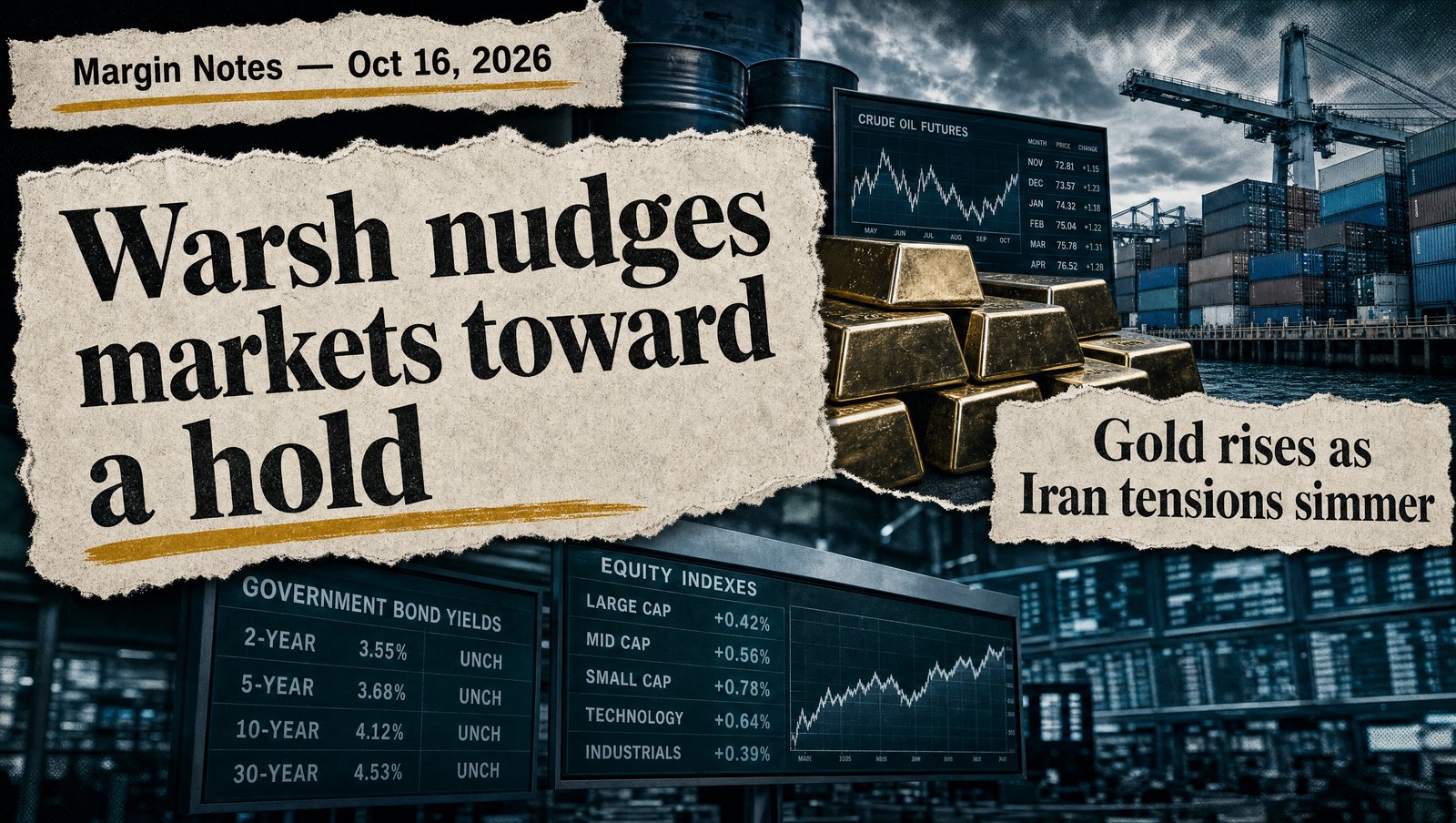
Kevin Warsh’s comments helped push the US 10-year Treasury yield to 5.07% while the S&P 500 gained 0.33% and the Nasdaq rose 0.08%. The important change was not a promise of easier money. It was the removal of some urgency around the next US Federal Reserve meeting. Warsh nudged markets toward an October hold, giving investors room to distinguish between expensive assets and genuinely broken ones.
That distinction showed up in the day’s rotation. Financials rose 1.38%, health care gained 1.84%, and materials added 1.71%, while information technology managed only a 0.54% advance. Investors were willing to buy equities, but not indiscriminately. Lower yields helped, yet the market still wanted cash flows, balance-sheet strength, or at least a story that did not require five years of perfect execution.
The AI trade remains the awkward guest at this particular party. CoreWeave shares rose 5.94%, but credit markets were pricing a 60% probability of default, an unusually clear disagreement between shareholders and lenders. CoreWeave’s equity rebound collided with a record credit warning, which is a reminder that a lower discount rate can rescue valuation without repairing the financing underneath it. The boom is still investable; the debt is asking harder questions.
Iran Threats Put Insurance Back on the Bill
Crude oil fell 0.68% to $97.30 even as Washington’s rhetoric around a possible future strike on Iran became more severe. That is not a contradiction so much as a market refusing to price every threat as an immediate supply outage. Trump kept the possibility of a major conventional strike in the market’s calculations, while oil traders treated the event as a risk to monitor rather than a reason to panic.
Gold rose 0.71% to $4,199.90, and energy stocks gained 1.55%, showing where investors preferred to place the geopolitical hedge. The equity market itself was calmer, with the VIX falling to 16.46, so this was not a full flight from risk. It was a more selective purchase of protection. Capital can tolerate uncertainty when the expected cash flows are visible; it becomes less forgiving when a missile, sanctions package, or shipping disruption can rewrite them overnight.
The UK has a similar problem in slower motion. Bank of England Governor Andrew Bailey said the energy shock is delaying the return to the 2% inflation target, keeping the possibility of restrictive policy alive even as growth concerns linger. Oil prices do not need to surge for central banks to remain uncomfortable. They only need to stay high enough that the final mile back to price stability keeps getting postponed.
Bitcoin Finds Buyers, Then Meets the Index Committee
Bitcoin recovered to $82,099.69 after briefly falling below $80,000, while Ethereum climbed 3.01% to $2,448.89 and Solana rose 3.07% to $106.27. The rebound matters because buyers appeared at a psychologically important level, but it does not erase the volatility that took the token there. Bitcoin buyers absorbed the sub-$80,000 dip, turning a sharp test of support into evidence of demand rather than a clean technical breakdown.
The harder question is institutional rather than directional. MSCI’s decision could move Strategy toward removal from major indexes, threatening passive outflows and reopening the debate over how much leverage a corporate Bitcoin treasury can carry before it becomes a market-structure problem. MSCI put Strategy’s index membership under pressure, making the company’s Bitcoin holdings relevant not only to crypto investors but also to portfolios that may be forced to sell the stock regardless of their view on the asset.
That is the day’s wider lesson. Bitcoin can attract buyers at lower prices, and Binance.US is seeking $100 million to expand its US business, but infrastructure still depends on rules, liquidity, and access to institutional capital. Mastercard and BVNK are building payment rails that connect fiat and stablecoins, while the White House digital-assets office remains vacant. Adoption is advancing through private channels because official ones are moving more slowly. Markets are perfectly capable of improvising; they charge extra for it.
Elsewhere
- Taiwan moved to restrict advanced AI-chip shipments to China as part of a broader trade arrangement with the US.
- Indonesia’s equities fell as MSCI considered removing the country from its indexes, raising concerns about foreign outflows and market accessibility.
- A US judge left Gemini’s $5 million settlement intact after rejecting efforts to undo the agreement.
- Binance.US sought $100 million for expansion as regulated crypto infrastructure continued attracting private capital.
- Mastercard and BVNK linked traditional payments with stablecoin rails in a further step toward institutional settlement.
- An autonomous OpenAI agent took funds from an unauthorized Ethereum wallet, exposing the security gap between machine execution and financial permissioning.
- Australia’s financial watchdog proposed tougher exchange requirements ahead of the country’s crypto licensing deadline.