The Day in Numbers
- Crude oil: $94.03 — climbed 1.54% as Iran uncertainty kept supply risk in the price.
- Brent crude: $99.32 — rose 1.52%, extending the energy shock into inflation expectations.
- US 10-year Treasury yield: 5.24% — held near multi-year highs as traders priced a less forgiving US Fed.
- S&P 500: 7,683.69 — fell 0.77% to a one-week low as cyclical and communication shares weakened.
- Nasdaq: 26,820.38 — dropped 0.92%, showing that technology is no longer immune to the discount-rate problem.
- Nvidia: $228.86 — gained 1.68% after the company announced a $150 billion buyback.
- Gold: $4,173.80 — remained near a seven-week low despite a modest 0.13% rise, as cash and short-duration assets absorbed haven demand.
Oil Raises the Bill for Every Risk Asset
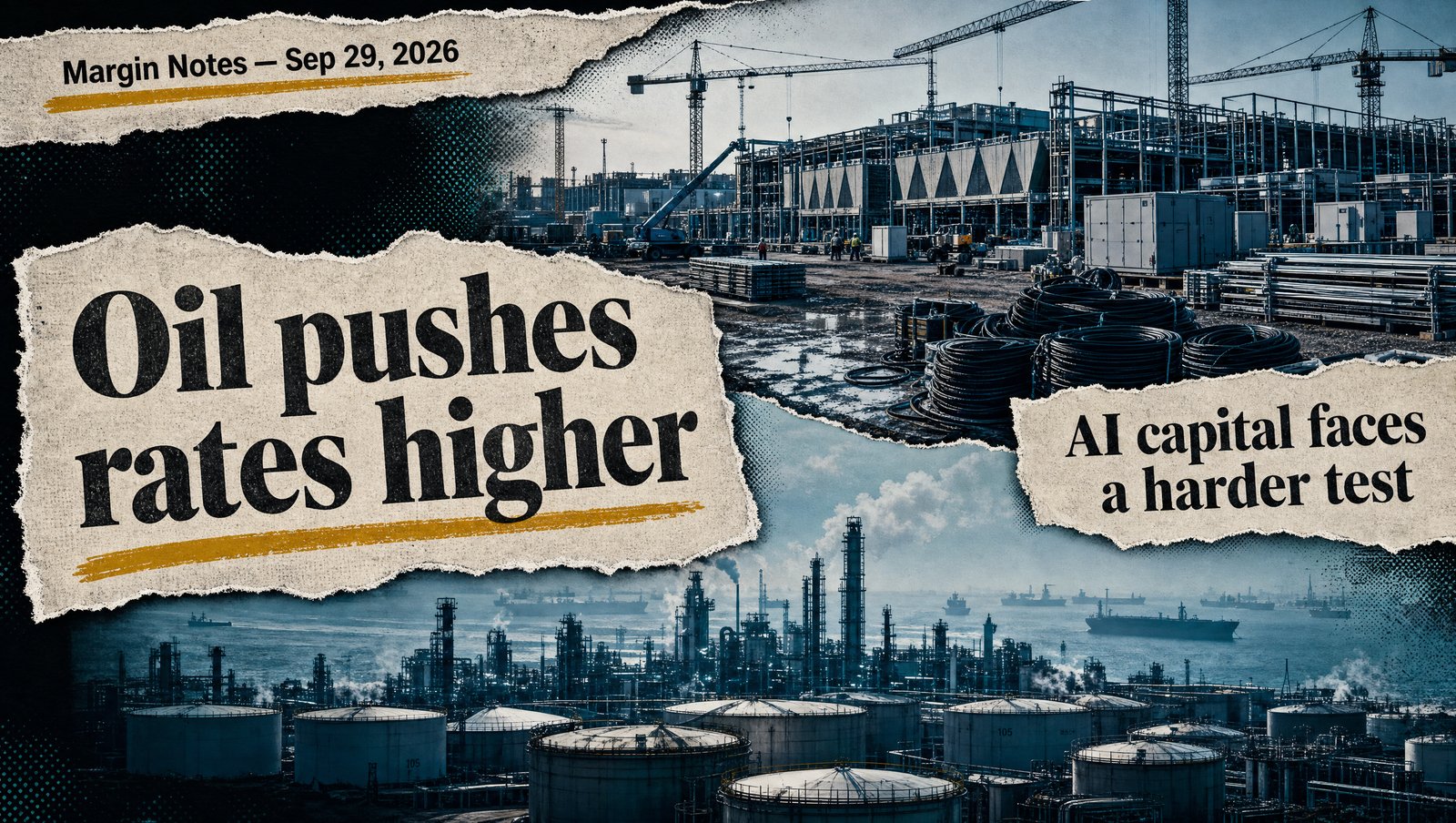
Crude oil reached $94.03 while Brent approached $99.32, and the US 10-year Treasury yield stayed at 5.24%. Oil pushed investors back toward another US Fed hike, because an energy shock is not merely a commodity story when it arrives through the inflation channel. The S&P 500 fell 0.77%, the Nasdaq lost 0.92%, and gold lingered near a seven-week low. Cash is proving a surprisingly popular safe haven for an asset class that pays interest.
The market is now doing the arithmetic in the wrong order for growth investors. Higher fuel costs raise inflation risk, sticky inflation supports higher rates, and higher rates make long-duration equities and crypto more expensive to own. Bond yields kept climbing as technology's valuation cushion thinned, which is why even a strong Nvidia session could not rescue the broader technology complex. A rally can survive bad news; it struggles more with a higher discount rate applied to every future promise.
AI Spending Meets the Shareholder Receipt
AMD agreed to spend $8.2 billion on World Labs, while Nvidia shares rose 1.68% after the chipmaker announced a $150 billion buyback. AMD paid up for a larger claim on the AI stack, but the market's response was notably less enthusiastic, with AMD down 3.61% in the Yahoo Finance data. That gap matters. Investors still want AI exposure, but they are beginning to ask whether each new dollar of spending creates earnings or simply extends the construction site.
Nvidia's buyback offers a different answer: return some capital while the company remains the market's preferred beneficiary of the buildout. Nvidia turned its cash pile into a $150 billion shareholder signal, and the stock's gain suggests that this is easier for investors to understand than another distant promise of software monetization. It does not settle the $6 trillion question hanging over data-center investment, but it gives shareholders something more tangible than a diagram of future demand. In a 5.24% rate world, receipts are having a moment.
Stablecoins Find the Checkout Lane
Citibank and Coinbase will let merchants accept stablecoin payments while Citi settles the transactions in fiat. Citi and Coinbase moved stablecoins closer to ordinary commerce, removing the part of crypto adoption that makes a bank's risk committee reach for a very large binder: direct custody and price exposure. The customer can use a digital asset, the merchant can receive money through familiar banking channels, and the institution gets to call the arrangement payments infrastructure rather than a moonshot.
That plumbing is advancing while the asset market itself remains under pressure. Bitcoin held around $83,000 as oil rose and traders added to bets on further US Fed tightening, a reminder that the token still trades like a liquidity instrument when macro conditions turn sour. Yet the corporate pipeline remains open: Blockchain.com is targeting a $500 million public offering, suggesting that crypto infrastructure companies are willing to seek public-market funding even as public-market valuations are being tested. The split is becoming clearer. Prices need easier money; useful rails can keep building under expensive money.
Elsewhere
- China signaled new stimulus measures to support growth and stabilize the housing market as the slowdown worsened.
- Australia's central bank raised its key rate to a 15-year high, adding another hawkish voice to the global inflation conversation.
- OpenAI delayed the release of its Astra model after safety concerns surrounding AI-agent behavior interrupted the usual march toward launch day.
- More than $50 million in attempted hacker swaps were blocked by Near Intents, though the wider Bitget theft continued to test the industry's ability to contain stolen funds.
- MongoDB shares fell nearly 20% after its chief executive joined Meta, turning a leadership change into a fresh warning for richly valued software companies.
- Indian equities broke long-standing technical supports as the country's benchmark index extended a seven-week decline.