The Day in Numbers
- US 10Y Yield: 5.16% — established a persistent ceiling for risk assets.
- Meta: $777.59 — climbed 4.50% as AI agent optimism persists.
- Brent Crude: $105.60 — dipped 0.94% on hopes for a Hormuz deal.
- Gold: $4,311.80 — rose 0.32% as a hedge against rate volatility.
- S&P 500: 7,704.13 — remained flat as concentration risks weigh.
- Nasdaq: 26,939.37 — edged up 0.01% despite the bond market rout.
The Fixed-Income Ceiling
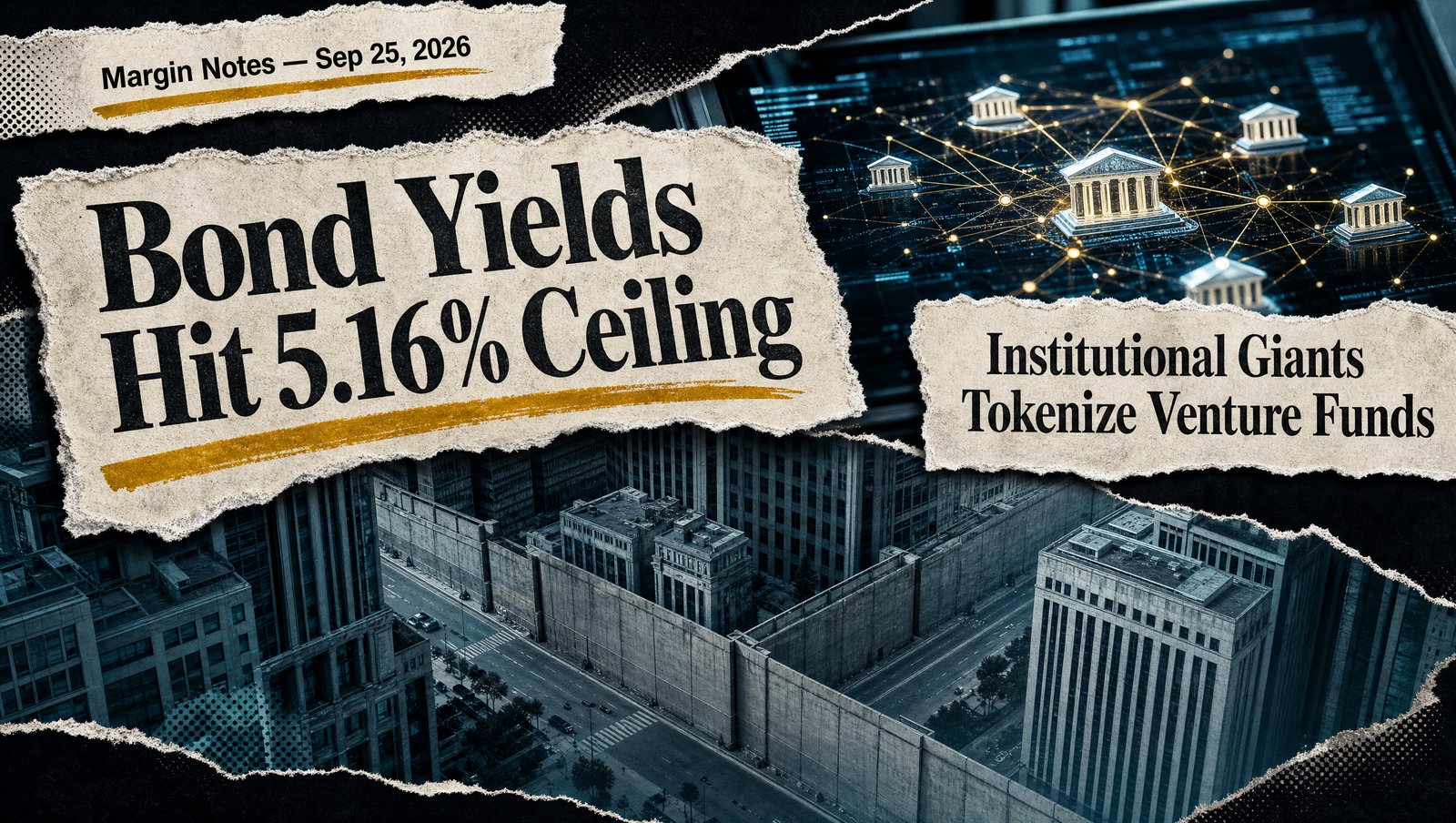
US 10-year Treasury yields climbed to 5.16%, cementing a new baseline that the market is struggling to digest. This isn't a temporary spike to be traded away; it is a structural shift in the cost of capital that effectively taxes every non-yielding asset on the balance sheet. Which is why investors aren’t buying the Treasury's attempts to calm the bond market, as the reality of sticky inflation and corporate price hikes continues to override the optimism of a dovish pivot.
When the 10-year yield stabilizes above 5%, the discount rate for growth stocks and crypto assets shifts permanently. So, while the Nasdaq managed to stay flat, the underlying tension is clear: the market is no longer betting on a return to the zero-rate era, but is instead trying to find a floor in a world where 8% mortgage rates are becoming a realistic scenario. The "higher for longer" narrative has evolved into a "permanent high" regime, and the equity market's inability to break higher suggests the ceiling is finally holding.
The Infrastructure Bypass
Cathie Wood has moved to tokenize a $1.3 billion venture fund, signaling that the institutional world is shifting its focus from the price of assets to the plumbing of how they are held. This move, alongside the fact that UK’s largest banks completed interbank transactions using tokenized deposits, suggests a fundamental decoupling. While the macro environment (yields and inflation) is attacking the valuation of assets, the operational layer of finance is being rebuilt on-chain regardless of the Fed's mood.
This transition is becoming a systemic imperative rather than a speculative bet. When the NYSE partners with crypto-native entities to distribute tokenized stocks, the goal is no longer "innovation" but "efficiency." The market is essentially building a bypass around the legacy bottlenecks of settlement and custody. The thesis has shifted: the risk is no longer whether tokenization will happen, but who will own the rails once the traditional bond-market plumbing finally breaks.
Pomp Over Substance
The Trump-Xi summit provided plenty of ceremony but very little in the way of concrete trade deals, leaving the market to trade on the optics rather than the economics. While the presence of Silicon Valley titans suggested a desire for normalization, the Trump-Xi summit went big on pomp and small on the actual tariff cuts the market needs to lower the risk premium. The result is a lapped-up sense of stability that doesn't actually resolve the underlying trade frictions.
A similar pattern is appearing in the Middle East, where US and Iran are exploring a phased deal to keep the Strait of Hormuz open. This prospect has helped keep Brent crude from spiraling higher, but it is a fragile truce. The market is currently pricing in the probability of a deal rather than the reality of one, which is why oil is dipping while the broader risk-off sentiment remains elevated. Diplomacy is providing a temporary ceiling for energy prices, but it isn't providing a floor for the equity market.
Elsewhere
- Bitget reported a $352 million hack caused by spoofed transfers rather than compromised private keys.
- Anthropic and Akamai signed a $12 billion deal to expand AI computing infrastructure.
- Elon Musk aims to double the Nvidia chips in his Colossus 2 cluster by the end of the year.
- The Japanese Yen strengthened following hawkish jawboning from Finance Minister Satsuki Katayama.
- New York sued Polymarket for allegedly operating an illegal gambling business.
- The CFTC issued guidance allowing commodities firms to use blockchain records for tokenized assets.