The Day in Numbers
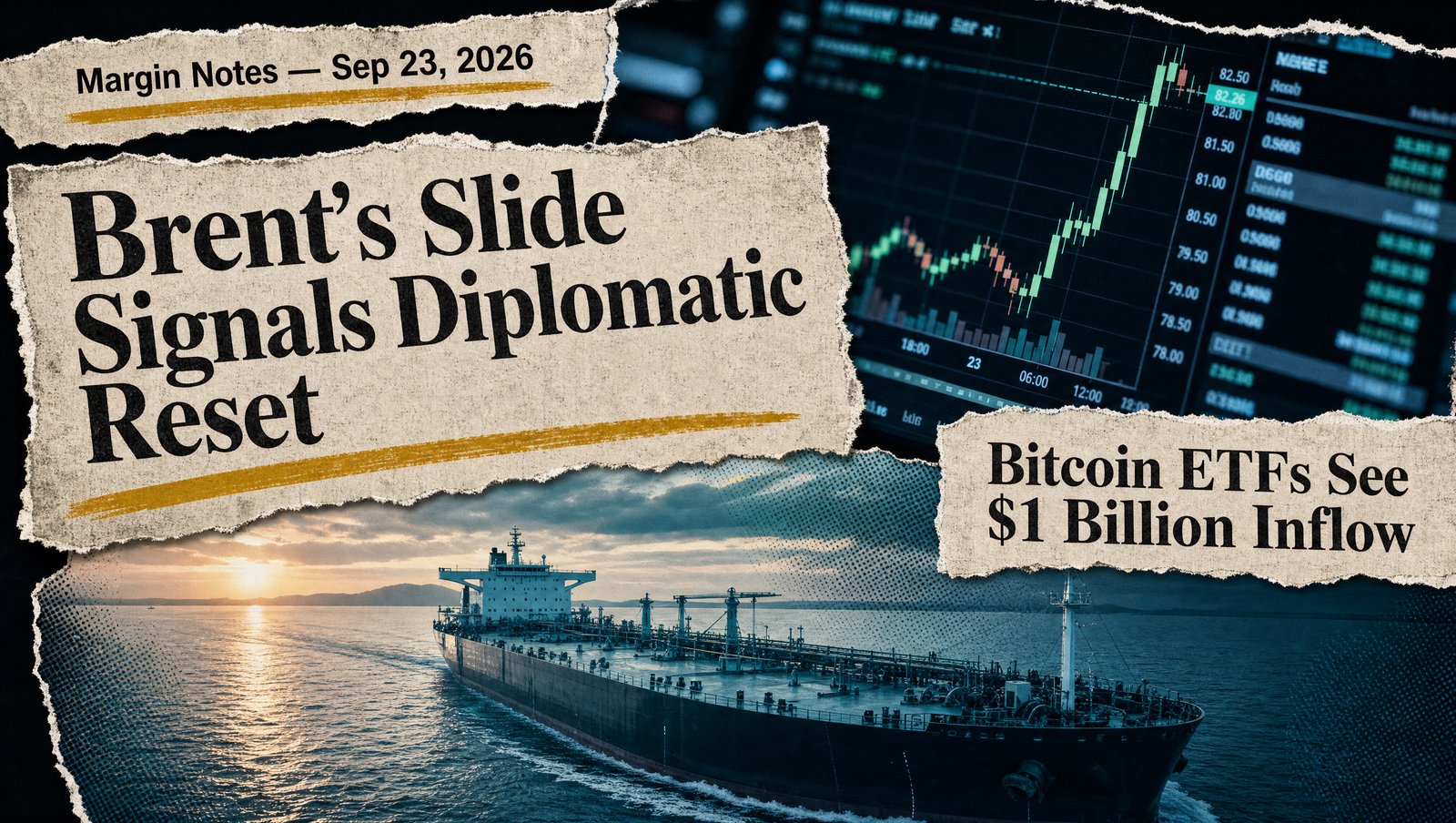
- Brent Crude: $89.26 — slid 1.39% as the market priced in a diplomatic breakthrough with Iran.
- Nasdaq: 27,244.28 — climbed 0.45% to extend its record-breaking streak.
- Bitcoin: $87,000 — held key levels as institutional inflows hit a historic peak.
- S&P 500: 7,764.64 — remained flat as investors balanced diplomacy against bond market warnings.
- US 10Y Yield: 4.95% — stabilized while the market awaited the next Fed signal.
- US-Korea Trade: $350 Billion — progress hailed on a deal to reduce Asia-Pacific friction.
Diplomacy's Energy Discount
Brent crude dropped to $89.26 as the US government signaled a breakthrough in talks with Iran, shifting the narrative from "annihilation threats" to productive dialogue. This price action represents a fundamental repricing of the geopolitical risk premium; the market is no longer trading the fear of a closed strait, but the probability of a deal. So, while the energy complex remains volatile, the immediate slide suggests that the "fear" component of the tape has been successfully neutralized by diplomatic optimism.
This thaw is not limited to the Middle East, as US and South Korea reported significant progress on a $350 billion trade agreement. When two major geopolitical frictions ease in a single session, the result is a risk-on tide that supports equities and stabilizes yields. That, in turn, provides a cushion for the Nasdaq to continue its climb, as the market decides that a diplomatic reset is more consequential than the structural headwinds cited by the bond market.
Institutional Crypto Convergence
Spot Bitcoin ETFs attracted nearly $1 billion on Monday, marking the ninth-largest single-day inflow in the fund's history. This surge in capital reinforces the thesis that Bitcoin has transitioned from a speculative asset to a core institutional holding. Which is why the asset is now maintaining a rare winning streak, as the market ignores the noise of regulatory probes to focus on the sheer volume of institutional accumulation.
The plumbing of the ecosystem is also tightening, as Binance invested $100 million in Circle to extend its USDC distribution agreement. By linking the world's largest exchange more deeply with a regulated stablecoin issuer, the industry is effectively building a more resilient bridge between TradFi and DeFi. The result is a market structure that is less dependent on the whims of the US government's legislative timeline and more reliant on the operational reality of institutional integration.
The AI Capital War
The Nasdaq climbed to 27,244.28 as investors continued to chase the AI agent narrative, despite warnings from figures like Ray Dalio about a devastating bubble. The market has essentially decided that the risk of missing the next leg of the rally is greater than the risk of a valuation correction. So, the momentum remains skewed toward the "buy the dip" mentality, as the AI trade evolves from simple chip-buying to a broader bet on the infrastructure of autonomous agents.
However, the cost of funding this expansion is rising, which is why SoftBank offered record yields on jumbo junk bonds to finance its AI infrastructure push. This move highlights a growing tension: the demand for AI capacity is infinite, but the capital required to build it is becoming increasingly expensive. This friction is already appearing in the East, where Chinese AI firms tumbled following reports of regulatory probes into DeepSeek and Moonshot, proving that the AI race is as much about political survival as it is about technological superiority.
Notable & Noteworthy
- Apollo capped its private credit fund as nearly 15% of investors sought to exit their positions.
- President Trump endorsed a diesel export ban, signaling a potential shift in US energy trade policy.
- Airtel Money announced plans for a London IPO to expand its mobile payment infrastructure.
- Solana began testing the Alpenglow upgrade to reduce transaction finality to 150 milliseconds.
- Canada's six largest banks launched a tokenized deposit initiative to modernize interbank settlements.
- Zcash surged 10% as Bitcoin held steady near the $87,000 mark.