The Day in Numbers
- S&P 500: 7,637.76 — climbed 1.14% as the initial shock of the Fed hike gave way to a broader recovery.
- Nasdaq: 26,418.30 — rose 1.69%, led by a strong comeback in semiconductor and AI chip stocks.
- Brent Crude: $102.49 — dipped 2.22% on hopes that Iran diplomacy might cap the energy premium.
- Gold: $4,434.80 — gained 0.80% as investors maintained a cautious hedge against geopolitical tail risks.
- US 10-year Treasury yield: 4.92% — stabilized as the market accepted the new interest rate baseline.
- Bitcoin: ~$77,000 — remained resilient despite a major policy shift from the Bank of Japan.
The Regulatory Bridge to On-Chain Equities
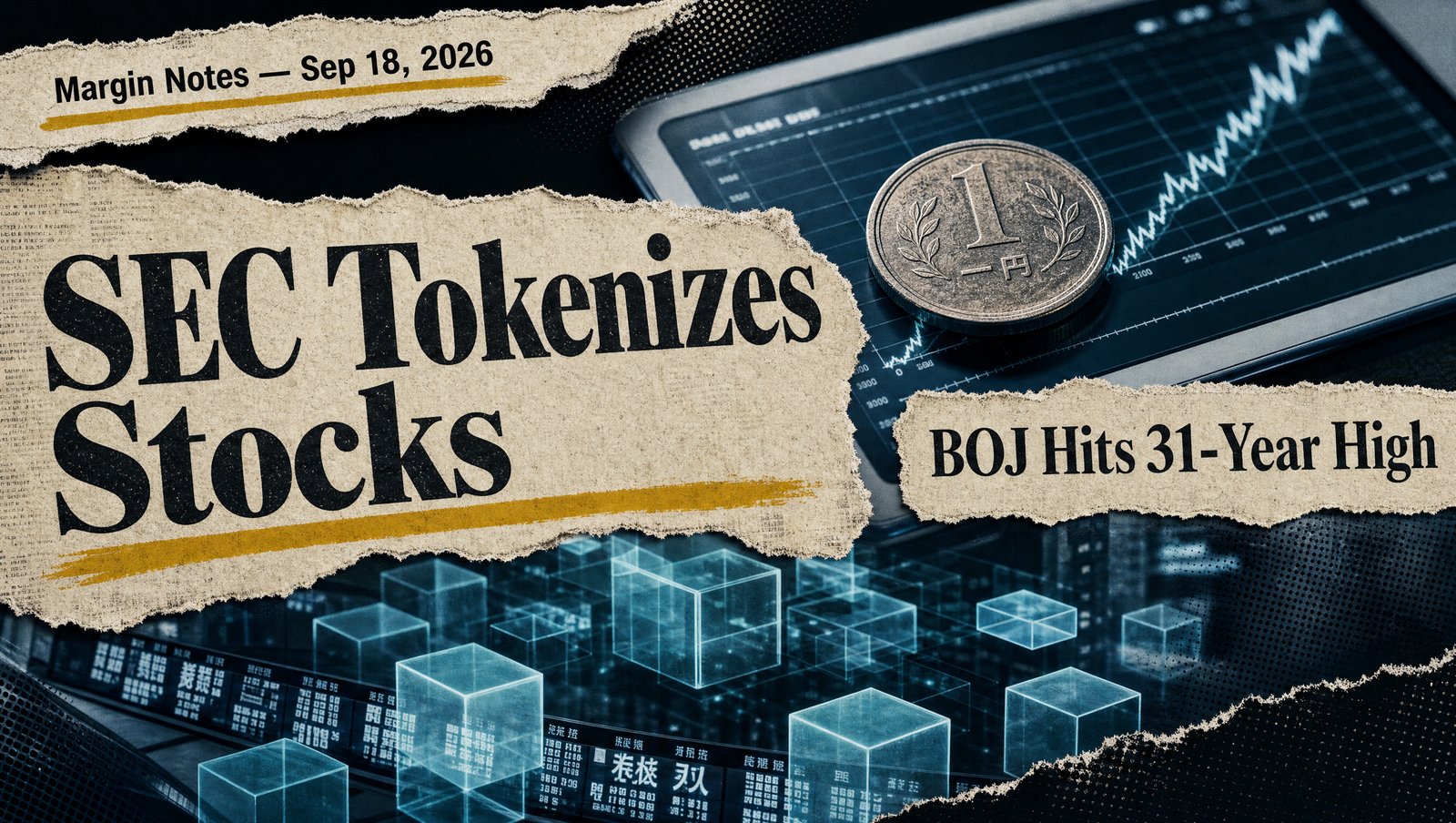
The US SEC issued guidance to tokenize stocks and rolled out an innovation exemption for tokenized securities venues, effectively building a bridge between traditional finance and the blockchain. This move is a strategic pivot; after the US Senate failed to pass the Clarity Act, the regulator decided to stop waiting for a legislative roadmap and start writing its own. By granting a five-year exemption to venues that list tokenized assets, the SEC is essentially inviting Wall Street to move its plumbing onto the chain without the immediate burden of full exchange registration.
This shift suggests that the "institutionalization" of crypto is no longer about whether Bitcoin is a store of value, but about whether a corporate bond can settle in seconds. The goal is to replace the slow, manual reconciliation of the legacy system with the efficiency of a distributed ledger. It is a pragmatic admission that the technology is ready, even if the political will in Washington remains fragmented. The plumbing is being installed by administrative fiat because the legislative path was blocked.
The Yen's New Gravity
The Bank of Japan raised interest rates to a 31-year high, a move that historically would have triggered a violent unwinding of the yen carry trade and a global risk-off rout. However, the reaction this time was muted, and Bitcoin topped $77,000 while the Nasdaq climbed. The market's indifference to the BOJ's tightening suggests a fundamental change in how global liquidity is managed; the "yen carry" is no longer the sole engine of speculative risk.
This resilience is a signal that risk assets have found new anchors. When the world's cheapest funding source becomes slightly more expensive, the market didn't panic—it simply adjusted. The fact that Bitcoin decoupled from the traditional "rate hike = crash" narrative indicates that the asset is beginning to trade on its own structural demand rather than just acting as a high-beta proxy for Japanese liquidity. The gravity has shifted, and the market is finding its balance in a higher-rate world.
Energy's Modeling Void
Brent crude slipped to $102.49 as traders bet on a diplomatic de-escalation in the Middle East, but the underlying volatility remains extreme. JPMorgan admitted its oil models are broken because the unpredictability of the Iran conflict has rendered traditional supply-demand forecasting useless. We have entered a period where the price of a barrel is determined by the probability of a diplomatic "win" rather than the actual volume of oil in the pipes.
This volatility has created the "TACO" trade—the bet that the US government will eventually back down on its most aggressive Iran stances. It is a dangerous game of chicken where the market is pricing in a political habit rather than a fundamental reality. When the analysts at a major investment bank admit they can't model the asset, it means the market is no longer trading oil—it is trading geopolitical intuition. The risk is not that the price will go up or down, but that the narrative will suddenly flip.
Meanwhile
- SoftBank raised its Arm margin loan to $25 billion to fuel its aggressive AI infrastructure bets.
- Strategists expressed their highest bullishness on European stocks in eight years.
- India began tokenizing its $620 billion corporate bond market via a new pilot program.
- S&P Global acquired the security firm OpenZeppelin to deepen its crypto infrastructure capabilities.
- Robinhood reported a 61% jump in crypto trading volume during August.
- Crypto exchange CoinEx announced its shutdown after nine years of operation.