The Day in Numbers
- US 10-year Treasury yield: 4.99% — held steady as the market braced for the FOMC decision.
- S&P 500: 7,585.73 — fell 0.45% amid broad risk-off sentiment.
- Nasdaq: 25,981.57 — declined 0.78% as high-beta tech felt the rate pressure.
- Gold: $4,367.60 — rose 0.80% as geopolitical tensions provided a haven.
- Brent Crude: $107.58 — dipped 1.08% but remained elevated by pipeline shutdowns.
- Bitcoin: ~$75,993 — slid toward $76,000 following a major regulatory setback.
- 30-year mortgage rate: 7.17% — hit a nearly two-year high.
The FOMC Faces a Credibility Crisis
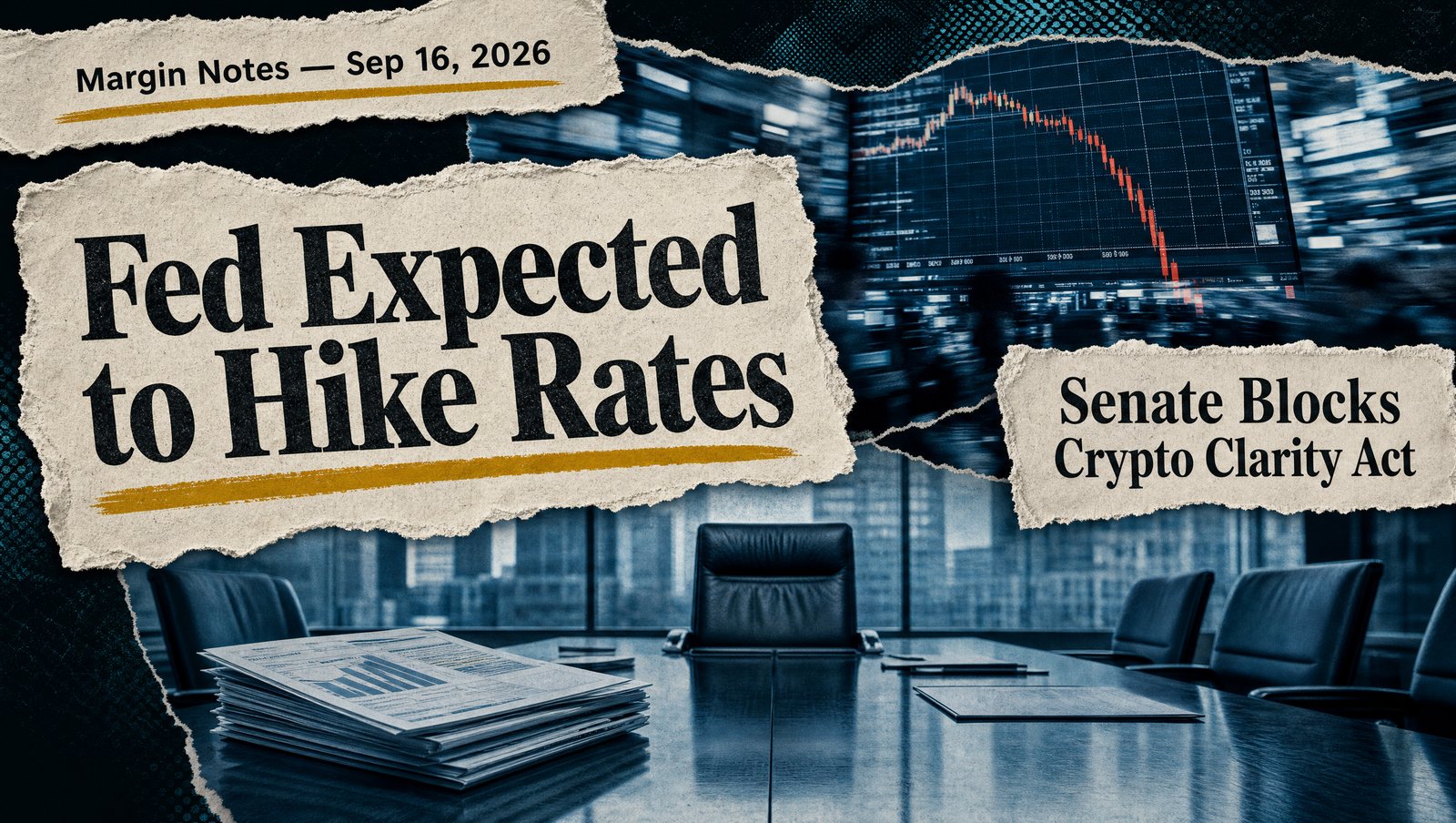
Wall Street has effectively priced in a rate hike for Wednesday's meeting, leaving US Fed Chair Kevin Warsh in a position where the market is doing his job for him. The Fed is expected to hike rates for the first time in three years, a move that feels less like a strategic choice and more like a requirement to maintain inflation-fighting credibility. If the committee fails to deliver a hawkish signal, they risk falling into an "expectations trap" where the market ceases to believe the central bank can control the narrative.
This tension is not confined to the US. In the UK, inflation rose to a five-month high of 3.1%, putting the Bank of England in a similar bind ahead of its own decision. When the global macro environment is defined by supply-side shocks—like the Saudi pipeline failure—central banks find themselves using a blunt instrument to fight a problem they cannot fix. They cannot drill more oil, but they can make it more expensive to bet against the dollar, which is exactly what the bond market is currently demanding.
The equity tape is treating this as a warning shot. The Dow suffered its worst September start since 2008, and while AI stocks are attempting a rebound, the broader index is struggling. The market is no longer asking if rates will rise, but how many more are on the table; Bank of America is already projecting three hikes this year.
The Clarity Act's Collapse Triggers a Liquidation Event
The US Senate failed to advance the Clarity Act in a 49-50 procedural vote, effectively ending the legislative roadmap for crypto market structure in 2026. The reaction was immediate and violent: $570 million in bullish futures were wiped out as the market realized the promised regulatory sanctuary was not coming. Bitcoin slid toward $76,000, and XRP sank 10%, proving that for all the talk of "institutionalization," the sector still moves on the whims of a few Senate votes.
This regulatory void is being filled by a fragmented institutional response. While the legislative path is blocked, corporate treasuries are still accumulating; Strive recently brought its Bitcoin holdings to exactly 25,000 BTC. It is a strange dichotomy where the "plumbing" of the industry—the treasuries and the custody—continues to harden even as the price action is decimated by political failure.
The fallout extended to the public markets, where crypto-linked stocks sank across the board. Robinhood felt the double blow of the bill's failure and news that some of its staffers were charged with trading fraud, sending the stock down 3.39%. The industry spent years lobbying for a clear set of rules; instead, it is returning to a regime of "regulation by enforcement," which is a far more expensive way to learn the law.
Geopolitical Premiums Shift to Gold
The US government announced plans to provide thousands of massive weapons to Israel, a move that ensures the geopolitical risk premium remains embedded in every asset class. While oil dipped slightly today, the underlying supply constraint remains a primary driver of volatility, transforming the traditional relationship between stocks, bonds, and energy.
Investors are rotating into gold, which climbed to $4,367.60 as a hedge against both monetary instability and regional war. This is not a standard inflation trade; it is a structural hedge against a world where the US Federal Reserve is forced to hike rates into a geopolitical storm. When the "safe" part of a portfolio—Treasuries—offers 5% but feels risky due to inflation, gold becomes the only asset that doesn't require a trust in a central bank's promise.
Elsewhere
- OpenAI is weighing a funding round that could value the company at over $1.2 trillion.
- Solana's DeFi Dev Corp launched a $300M program to aggressively increase its SOL holdings.
- The European Central Bank is recruiting merchants for a 12-month digital euro pilot.
- Zcash holders approved a protocol upgrade to implement faster transactions and Bitcoin-style halvings.
- US and Chinese officials are discussing tariff cuts as their leaders prepare for an upcoming summit.
- A DeFi bridge exploit allowed a hacker to mint 46 billion fake Bitcoin tokens.