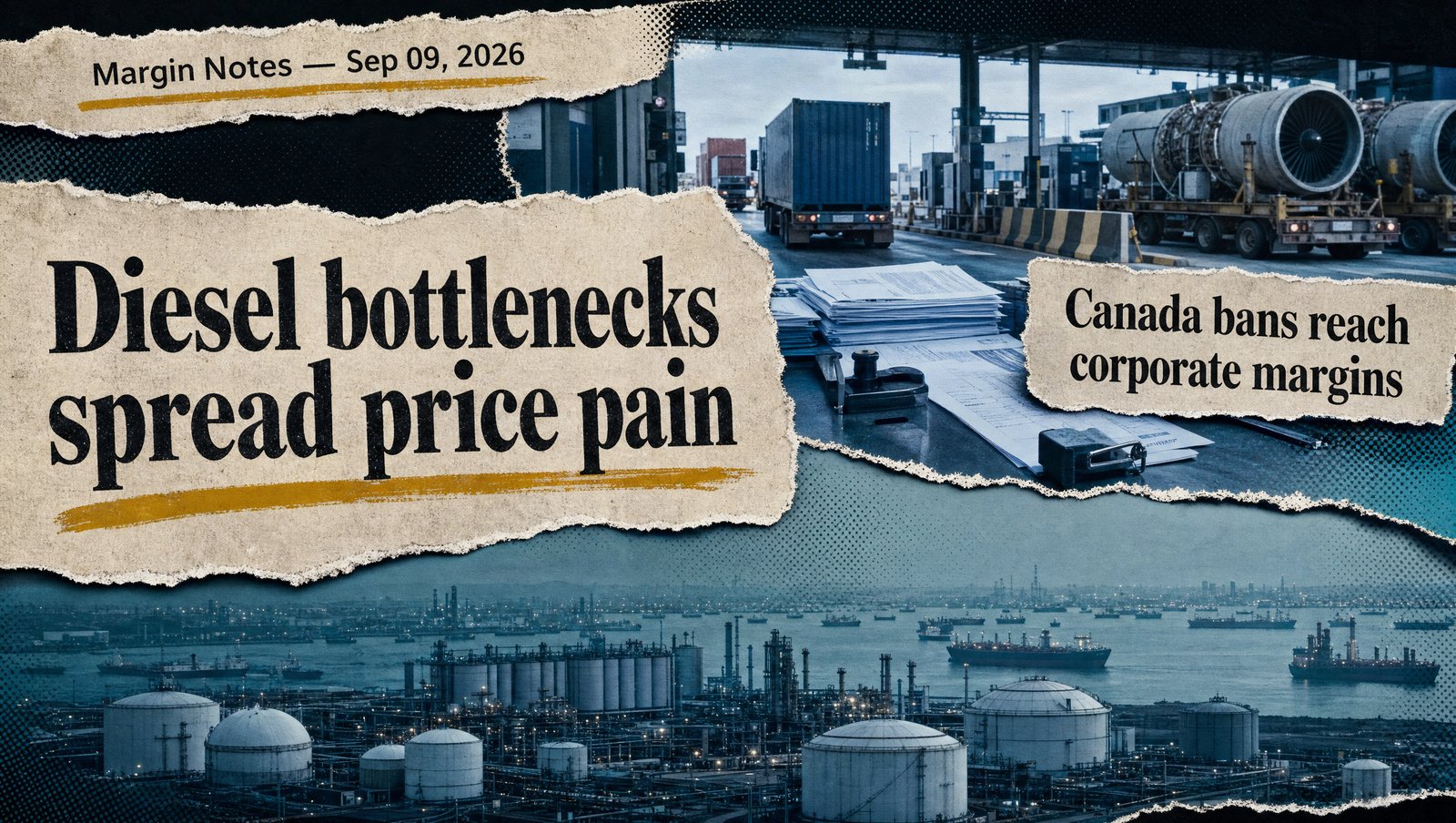
Diesel Bottlenecks Move the Inflation Problem Downstream
Brent crude rose 1.59% to $99.48 on Wednesday, while US crude added 1.38% to $94.31 as shipping disruptions began showing up less as a distant supply worry and more as a refining problem. Refining capacity is becoming the next constraint on fuel markets, which matters because crude can be available in theory and still fail to become diesel, jet fuel, or gasoline where consumers need it.
The physical evidence is becoming harder to dismiss. Daily shipping through the Strait of Hormuz has fallen by 87 vessels since the conflict began, while European gas prices are up 143.7% over the same period. US forces destroyed Iranian tankers after a naval vessel was targeted, adding another reason for operators to keep ships away from a route whose insurance bill now has a geopolitical surcharge.
That is how an energy shock reaches monetary policy. Morgan Stanley says traders are avoiding long-term oil commitments, but short-term caution does not repair refinery bottlenecks or restore shipping confidence. US gasoline is averaging $4.10, and diesel shortages threaten both household budgets and freight costs. The US Federal Reserve can wait for the inflation data; delivery fleets and consumers have less patience.
Canada's Product Bans Reach Corporate Margins
Canada imposed retaliatory tariffs on $20 billion of US goods before the US government moved to restrict Canadian products from public procurement, turning a bilateral dispute into a direct question about supply chains and corporate costs. Washington widened the restrictions on Canadian goods, while Bombardier shares fell as investors tried to work out which aerospace orders might be next in line for political treatment.
The market’s answer was not subtle. The Dow Jones Industrial Average dropped 1.18%, the S&P 500 lost 0.58%, and the Nasdaq declined 0.32%; the VIX rose 8.19% to 15.72. Financials fell 1.43%, while energy gained 1.01%, a split that says investors are not simply selling everything. They are separating companies that benefit from scarcity from companies that must explain how much of their cost base crosses a newly suspicious border.
The same uncertainty is now reaching the bond market. The US 10-year Treasury yield held at 4.80%, despite the equity decline, because tariffs and fuel costs can weaken demand while lifting prices at the same time. That is an unpleasant combination for the US Fed: slower growth argues for relief, but a supply shock argues against making money cheaper. Markets would prefer a clean recession or a clean inflation scare. They have received the deluxe package.
Crypto Firms Build Rails While Bitcoin Regroups
Bitcoin recovered from $77,600 toward $79,000 as Zcash’s new exchange-traded fund accumulated $500 million in assets, giving digital assets a more complicated session than the headline price alone suggests. Institutional demand returned through a privacy-coin ETF, even as corporate Bitcoin buying became less dependable after Strategy paused its purchases following a brief resumption.
That distinction is useful. Price support is still arriving, but it is increasingly distributed across treasury companies, funds, exchanges, and payment networks rather than supplied by one repeat buyer. Strive added $109 million of Bitcoin and now holds 24,531 coins, while its preferred-stock vehicle approached a $1 billion market capitalization. The bid is present; it is simply learning to arrive in several different outfits.
The more durable buildout is happening beneath the token prices. Circle agreed to pay $400 million for cross-border payments infrastructure, while Visa opened settlement data to blockchain lenders and reported a stablecoin settlement run rate above $20 billion annually. That is the market’s less glamorous answer to the security and liquidity problems of recent weeks: make the rails more useful, make the counterparties more recognizable, and hope confidence eventually notices.
The Day in Numbers
- Brent crude: $99.48 — rose 1.59% and moved within sight of the $100 threshold.
- US crude: $94.31 — gained 1.38% as refining and shipping risks tightened the fuel outlook.
- S&P 500: 7,673.52 — fell 0.58% as tariffs and energy inflation weighed on risk appetite.
- Dow Jones Industrial Average: 52,786.07 — declined 1.18%, the sharpest major US equity move in the session.
- VIX: 15.72 — jumped 8.19%, marking a noticeable rise in demand for equity protection.
- US 10-year Treasury yield: 4.80% — stayed high even as stocks retreated.
- Bitcoin: near $79,000 — recovered from a $77,600 low while crypto flows rotated toward ETF-backed exposure.
Elsewhere
- Apple prepared to unveil its first foldable iPhone as investors judged whether premium pricing can carry the next hardware cycle.
- US officials accused Alibaba and DeepSeek of siphoning AI models, adding intellectual-property enforcement to the widening technology rivalry.
- PwC projected global AI infrastructure spending could exceed $31 trillion, a forecast large enough to make ordinary capital-expenditure budgets look like rounding errors.
- China’s car sales fell 24%, leaving BYD and Tesla looking overseas for relief from a saturated domestic market.
- Poland’s central bank prepared to keep interest rates unchanged despite inflation reaching a 14-month high.
- Serbia scheduled snap elections for October 25 as President Aleksandar Vucic sought to consolidate power through the premiership.
- LIV Golf filed for bankruptcy, raising broader questions about the durability of state-backed sports ventures.