The Day in Numbers
- Brent crude: $95.57 — rose 0.97% as renewed Iran tensions lifted the supply premium.
- US crude: $90.79 — gained 0.63%, keeping energy inflation at the center of policy expectations.
- US 10-year Treasury yield: 4.81% — held near the upper end of the recent range.
- US 30-year Treasury yield: 5.288% — kept long-duration borrowing costs firmly elevated.
- S&P 500: 7,631.47 — fell 0.71% as energy pressure overwhelmed pockets of resilience.
- Nasdaq: 26,099.77 — declined 1.03%, with technology stocks absorbing the higher-rate pressure.
- Gold: $4,363.30 — dropped 0.75% despite the escalation, as the firm dollar and bond income competed with haven demand.
Oil Pushes Bonds Into the Same Argument
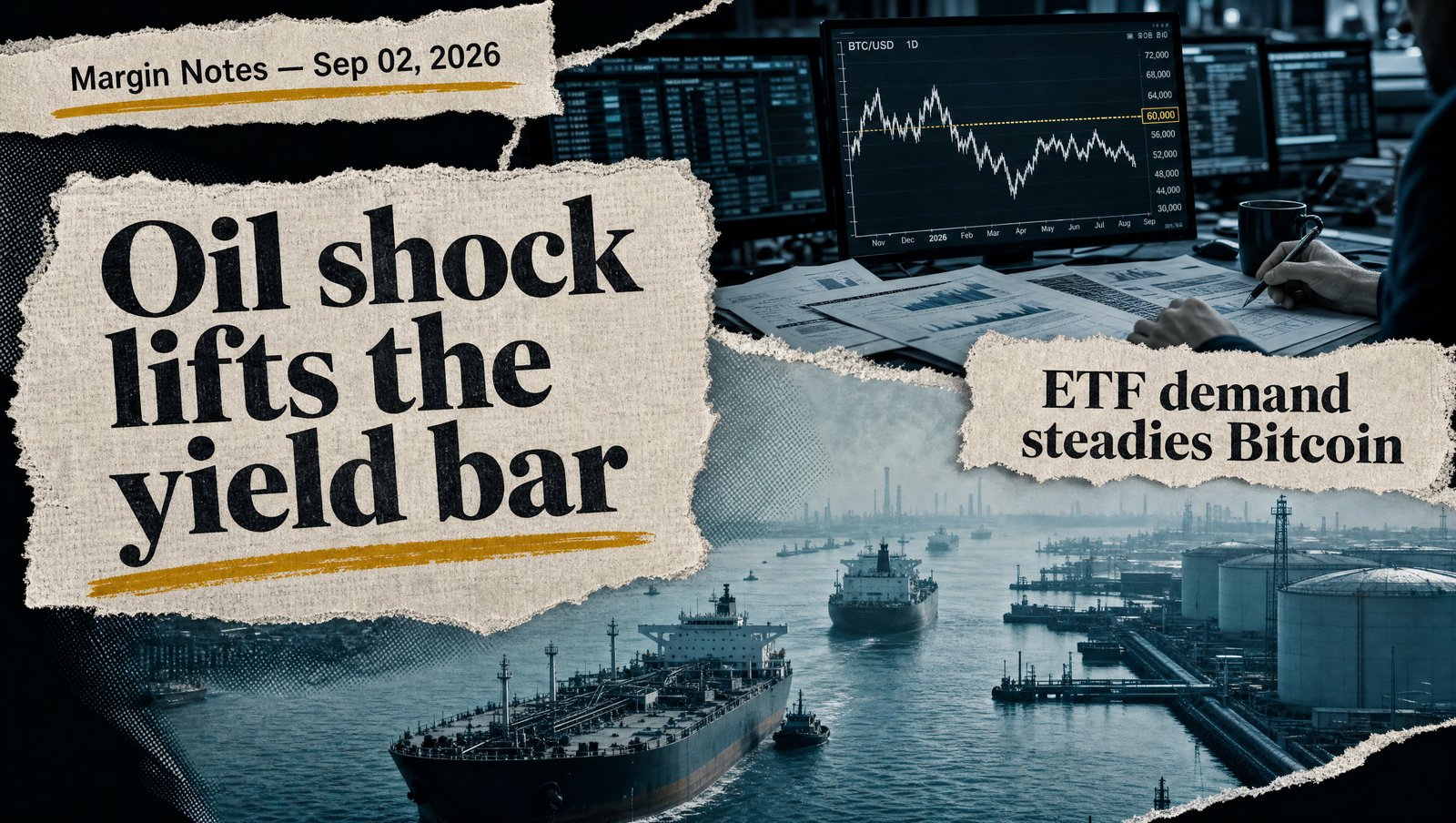
Brent crude reached $95.57 on Wednesday, while US crude moved above $90, giving the latest Iran strikes a direct route into inflation expectations. US-Iran fighting lifted oil prices as shipping risk returned to Hormuz, and the move was reinforced by reports of tankers being struck in the strait. Markets do not require a full blockade to become nervous. They only need to believe that the next shipment may take longer, cost more, or require a more imaginative insurance policy.
That pressure landed in government debt. The US 10-year Treasury yield held at 4.81%, while the 30-year yield reached 5.288%, levels high enough to make the bond market a participant in the shock rather than a quiet observer. Global yields climbed as oil revived the inflation premium, which raises the question of whether the US Federal Reserve can ease policy while energy costs are moving in the opposite direction. The S&P 500 fell 0.71%, the Nasdaq dropped 1.03%, and the industrial and consumer-discretionary sectors were among the weakest. Energy shares gained 1.54%; the rest of the economy received the invoice.
Gold’s 0.75% decline to $4,363.30 added an unusually clear footnote. A traditional haven is losing ground while Treasury yields remain high and the US dollar stays firm. That does not mean investors suddenly regard geopolitical risk as harmless. It means the market is ranking immediate income and liquidity above the emotional comfort of owning insurance.
Bitcoin's Institutional Bid Faces a Narrower Test
Bitcoin was quoted around $77,585 as large-cap tokens such as Solana, ether, and XRP fell more sharply, showing that the crypto market has not escaped the broader retreat. Bitcoin held up better than the higher-beta parts of crypto, even as oil rose and yields stayed elevated. Relative strength is useful here, but it is not the same thing as a clean haven trade. Bitcoin is being treated as the liquid part of the asset class, while the rest is being asked why it needs to exist at this particular moment.
The more durable signal is appearing in the funds rather than the spot tape. Bitcoin ETFs took in $217 million on Monday after a period of outflows, and buyers are again testing the $80,000 level. That demand matters because spot trading volumes are down 66% from their January highs, leaving ETF flows with more influence over the market’s marginal price. The bid is real, but it is not broad. ETF demand returned while the rally’s liquidity remained thin, a combination that can support Bitcoin until the next macro surprise, and then make the exit rather efficient.
The distinction also explains why Bitcoin can look steadier than gold one hour and more vulnerable than a Treasury bill the next. Investors are willing to keep strategic exposure, but they are less willing to pay any price for it. With the US 10-year yield at 4.81%, conviction now has to work alongside a functioning liquidity channel. That is a reasonable standard. Markets have occasionally been less demanding, usually just before becoming demanding again.
Nvidia Expands AI While Equities Narrow the Welcome
Nvidia is nearing a $14 billion acquisition of Hugging Face this week, extending its push from supplying AI hardware into owning more of the software and developer ecosystem. Nvidia moved toward a $14 billion Hugging Face deal, a sign that the company still sees the AI build-out as a multi-layer industry rather than a single product cycle. The strategic logic is straightforward: chips capture the spending, but tools and models help determine where the spending goes.
The equity response was less enthusiastic. Nvidia fell 1.51% to $217.44 even as Dell reported record demand for AI servers and raised its outlook. AI infrastructure demand stayed strong while Nvidia shares slipped, which is the market distinguishing business momentum from valuation comfort. Spending can remain enormous and still fail to protect a stock from higher discount rates. The US 10-year yield does not care how impressive the server order book looks.
That is the day’s broader pattern. Oil is testing the credibility of disinflation, bonds are demanding more compensation, Bitcoin is relying on a concentrated institutional bid, and AI companies are being judged on whether earnings can outrun the new financial arithmetic. The appetite for growth has not vanished. It has simply stopped accepting enthusiasm as collateral.
Elsewhere
- A Bank of Japan policymaker left room for an outsized rate hike, giving the yen another reason to strengthen and carry-trade investors another reason to check the exits.
- Bundesbank President Joachim Nagel signaled an imminent European Central Bank hike while cautioning against assuming a long tightening campaign.
- US Treasury Secretary Scott Bessent said China blocked a G20 communique, underscoring that trade friction remains a live threat to global growth.
- Singapore advanced rules requiring fully backed stablecoins, tightening the conditions for digital dollars while making the jurisdiction more attractive to institutions that prefer fewer surprises.
- The US Securities and Exchange Commission proposed changes for transfer agents and scheduled a discussion on round-the-clock trading, bringing blockchain settlement closer to the plumbing of public markets.
- Michael Saylor challenged MSCI's treatment of digital-asset treasury companies, arguing that index methodology could become a larger threat to Strategy than Bitcoin volatility.
- Ryanair reduced its passenger target as fuel prices squeezed airline economics, turning the crude spike into a problem with wings and a quarterly forecast.