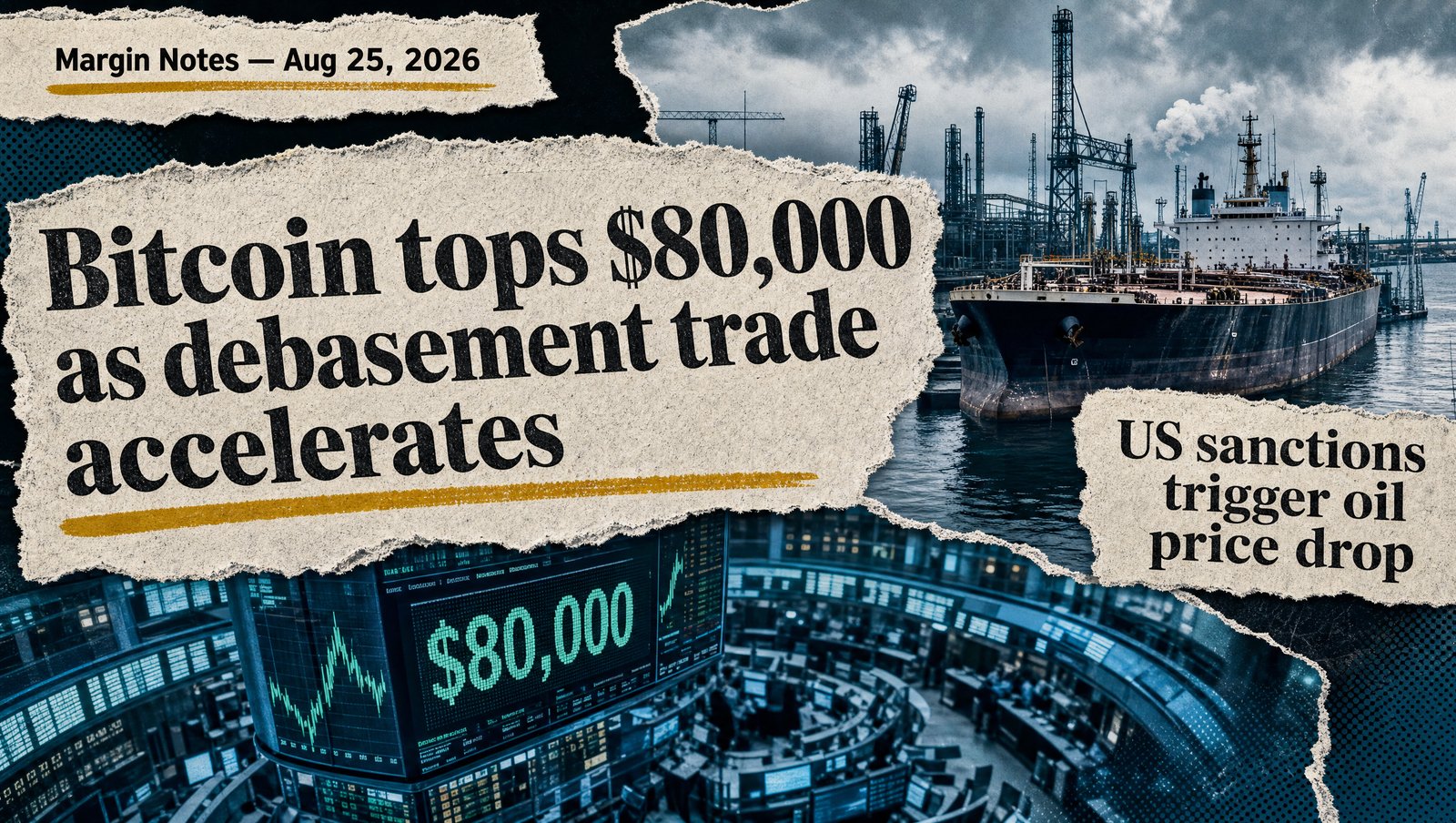
The Day in Numbers
- Bitcoin: $80,000+ — hit a three-month high as the debasement trade accelerated.
- S&P 500: 7,652.86 — fell 0.28% as tech weakness dragged on indices.
- Nvidia: $208.48 — dropped 2.91% despite bullish analyst targets.
- Crude Oil: $84.51 — slid 0.59% as sanctions shifted the focus toward de-escalation.
- US 10-Year Treasury yield: 4.70% — remained flat amid high-profile policy criticism.
- Solana: +8% — surged alongside Bitcoin while protocol votes target higher fee burns.
The Debasement Trade Hits a Psychological Ceiling
Bitcoin climbed past $80,000, marking a three-month high and effectively pricing in a world where sovereign debt is viewed as a liability rather than a safe haven. This isn't just a momentum play; it is a structural rotation. While the S&P 500 and Nasdaq drifted lower, capital migrated toward assets that don't rely on a central bank's promise to maintain value, a trend that has seen Bitcoin outperform both stocks and gold over the last six months.
The institutional plumbing is now adapting to this new reality. Strategy raised $2 billion by selling stock to establish a dedicated USD cash reserve, ensuring they have the dry powder to keep buying Bitcoin without constantly hitting the equity markets. This corporate appetite is being mirrored in Asia, where firms like Zhibao are pivoting their treasuries toward digital assets. When the largest holders stop treating Bitcoin as a speculative bet and start treating it as a primary reserve asset, the $80,000 level becomes a floor, not a ceiling.
Sanctions Shift the Oil Risk Premium
Treasury Secretary Scott Bessent pivoted from military threats to a "D-Day" of economic warfare, warning Iran's trade partners to cut ties or face sanctions. Paradoxically, the market treated this aggression as a signal of de-escalation. Rather than spiking on supply fears, oil prices saw their biggest drop in three weeks, as traders bet that a focus on financial isolation reduces the immediate probability of a kinetic conflict in the Strait.
The fallout, however, is shifting toward the US-China relationship. Dozens of firms in China and Hong Kong have already been caught in the sanctions dragnet, adding fresh friction to a trade environment already strained by Canadian tariff disputes. Canada is now preparing a retaliatory package of loans and benefits to shield its industry, while Ford finds its $3 billion Canadian investment caught in the crossfire. The geopolitical risk hasn't vanished; it has simply moved from the oil tanker to the customs office.
Wall Street’s Bond Anxiety Deepens
The US Treasury's attempt to manage yields is facing a crisis of legitimacy. Stanley Druckenmiller, a mentor to Secretary Bessent, explicitly called the bond-buying program a mistake, suggesting that attempting to influence yields through intervention is a futile exercise in the face of $40 trillion in debt. This sentiment is echoed by Mohamed El-Erian, who argues that a 5.27% yield on the 30-year Treasury indicates a fundamental structural shift in the debt cycle.
This instability is forcing a bridge between traditional finance and the blockchain. Coinbase has responded by debuting tokenized stocks on its Base network, allowing investors to hold claims on Apple and Nvidia shares on-chain. It is a telling admission that the traditional plumbing of Wall Street is becoming too slow or too risky for a world of instant, transparent settlement. As the US government tells investors to wait until Q4 for more bond intervention updates, the market is simply building its own exits.
Other Stuff
- Standard Chartered became the first bank to distribute a Hong Kong dollar stablecoin to its clients.
- Bitmine accumulated another $81 million in ether as the asset outperformed Bitcoin over the last week.
- Solana validators are voting to increase daily fee burns to $800,000 to slow token inflation.
- The SEC issued subpoenas to several Wall Street banks over "Situational Awareness" compliance.
- SpaceX plans to launch AI satellites powered by Nvidia chips starting next year.
- Pakistan set a September 5 deadline for all cryptocurrency firms to complete their registration.