The Day in Numbers
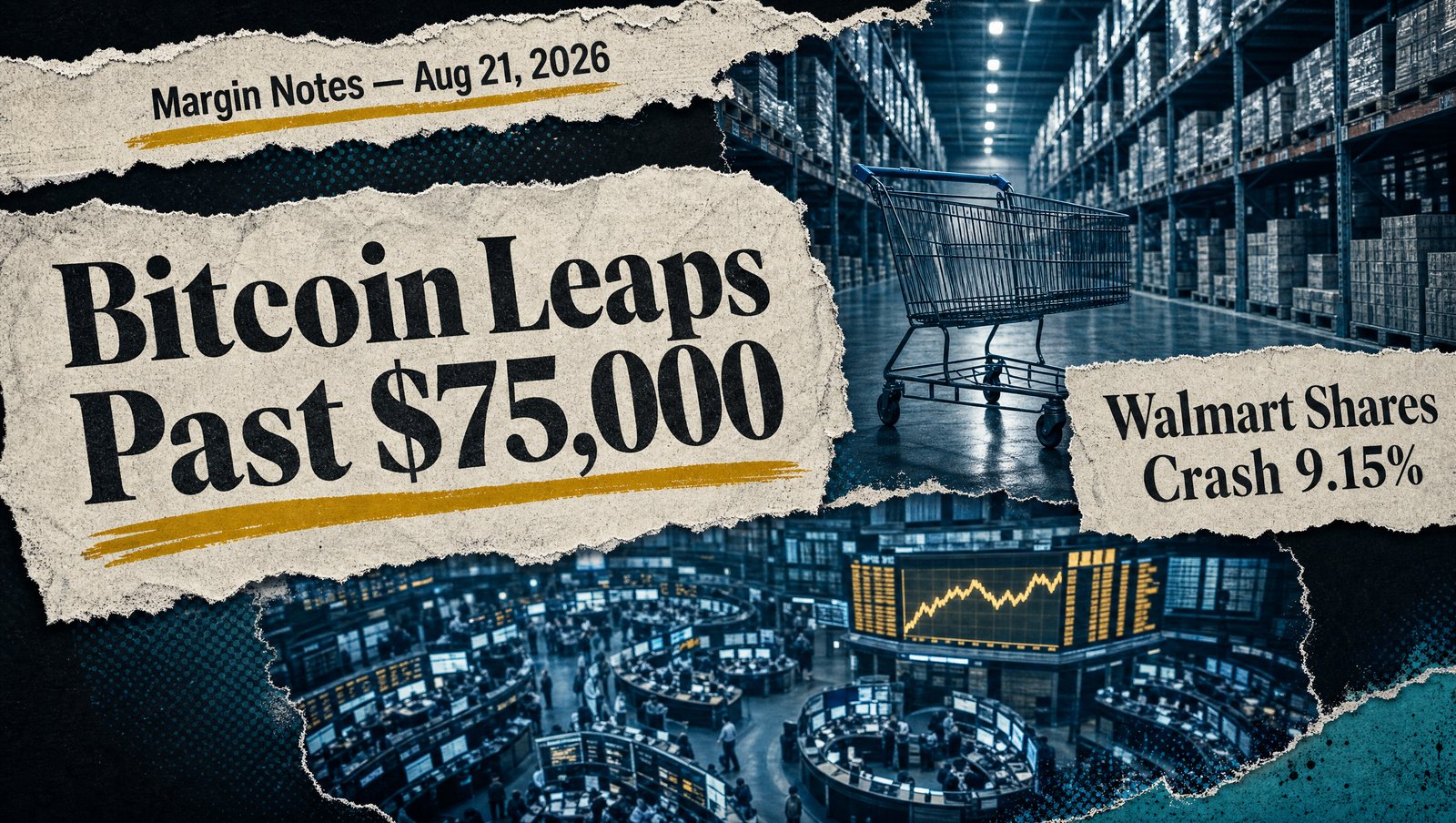
- Bitcoin: $75,000+ — leapt past the psychological level in its best week in two years.
- S&P 500: 7,641.16 — fell 0.87% as Treasury buybacks failed to soothe the bond market.
- US 10-year Treasury yield: 4.70% — stabilized after initial volatility.
- Gold: $4,623.60 — climbed 1.14% as investors rotated into non-sovereign assets.
- Brent Crude: $93.50 — rose 29% since the start of the conflict.
- Walmart: $103.84 — plummeted 9.15% on the slowest US sales growth in six years.
- VIX: 16.01 — surged 7.52% as equity volatility returned.
Bitcoin Decouples as Equities Hit a Wall
Bitcoin surged past $75,000, leading a broader rotation into hard assets while the Dow tumbled 703 points. This isn't a simple risk-on rally; it is a defensive pivot. As the S&P 500 and Nasdaq slid on weak retail data and bond anxiety, investors treated digital assets and gold as a shelter from the volatility of the traditional board.
The momentum is being fueled by a brutal short squeeze that wiped out $1 billion in positions in a single session. While the price action looks bullish, the underlying structure is a mix of forced liquidations and a genuine institutional bid, evidenced by $800 million in fresh ETF inflows. The market is currently hunting for "real" buyers to sustain these levels once the bears have finished exiting their positions.
The Treasury’s Buyback Band-Aid Fails to Stick
Treasury Secretary Scott Bessent signaled that the US government may expand buybacks to more than $4 billion per issue, yet the bond market remained unimpressed. The US 10-year yield held steady at 4.70%, but the broader equity market reacted with a rout. Investors are increasingly viewing these interventions as a tactical distraction from a structural disaster: a $40 trillion debt load that no amount of "noise" reduction can erase.
This fiscal tension is bleeding into the consumer sector. Walmart shares crashed 9.15% after reporting the slowest US sales growth in six years, a signal that the American consumer is finally feeling the squeeze of high borrowing costs and persistent inflation. When the world's largest retailer flashes a warning sign, the market stops betting on a soft landing and starts pricing in a harder one.
Geopolitical Friction Keeps Energy Above $90
Brent crude reached $93.50, remaining 29% above pre-conflict levels as the US blockade continues to squeeze Iranian oil supply to Chinese refiners. The US government is effectively conducting economic warfare, but the risk is that China may react with a blowback that disrupts global trade further. For the markets, the headline price is less important than the fact that the "risk premium" has become a permanent fixture of the cost of doing business.
This environment is pushing the AI sector toward a consolidation phase. While Anthropic is preparing a mega-IPO that could rival SpaceX in size, the broader tech sector is grappling with the cost of capital. Broadcom is seeking over $60 billion in AI-related debt, proving that the build-out continues, but the equity markets are no longer granting a free pass to companies whose valuations rely on distant future earnings.
Elsewhere
- MARA Holdings shares soared double digits as Bitcoin's price surge boosted confidence in mining infrastructure.
- The US CFTC warned it would create its own regulations if the Clarity Act fails to pass through Congress.
- X is exploring the use of stablecoins to facilitate payments for influencers and content creators.
- MANTRA token crashed 18% after a software exploit forced the blockchain to halt.
- Texas imposed a December deadline for crypto miners and data centers to complete grid reviews.
- Franklin Templeton plans to integrate tokenized assets into traditional fund structures.
- Two Binance employees were detained in the UAE, adding a layer of legal risk to the exchange's global operations.