The Day in Numbers
- S&P 500: 7,707.98 — rose 0.21% as Treasury-market pressure eased.
- Nasdaq: 26,331.09 — gained 0.16%, despite information technology falling 0.73%.
- US 10-year Treasury yield: 4.65% — held steady after official bond-buying support.
- Brent crude: $92.14 — climbed 0.57% and remained 26.7% above its level at the start of the war.
- Gold: $4,550.50 — edged up 0.11% as investors sought protection from currency and fiscal risk.
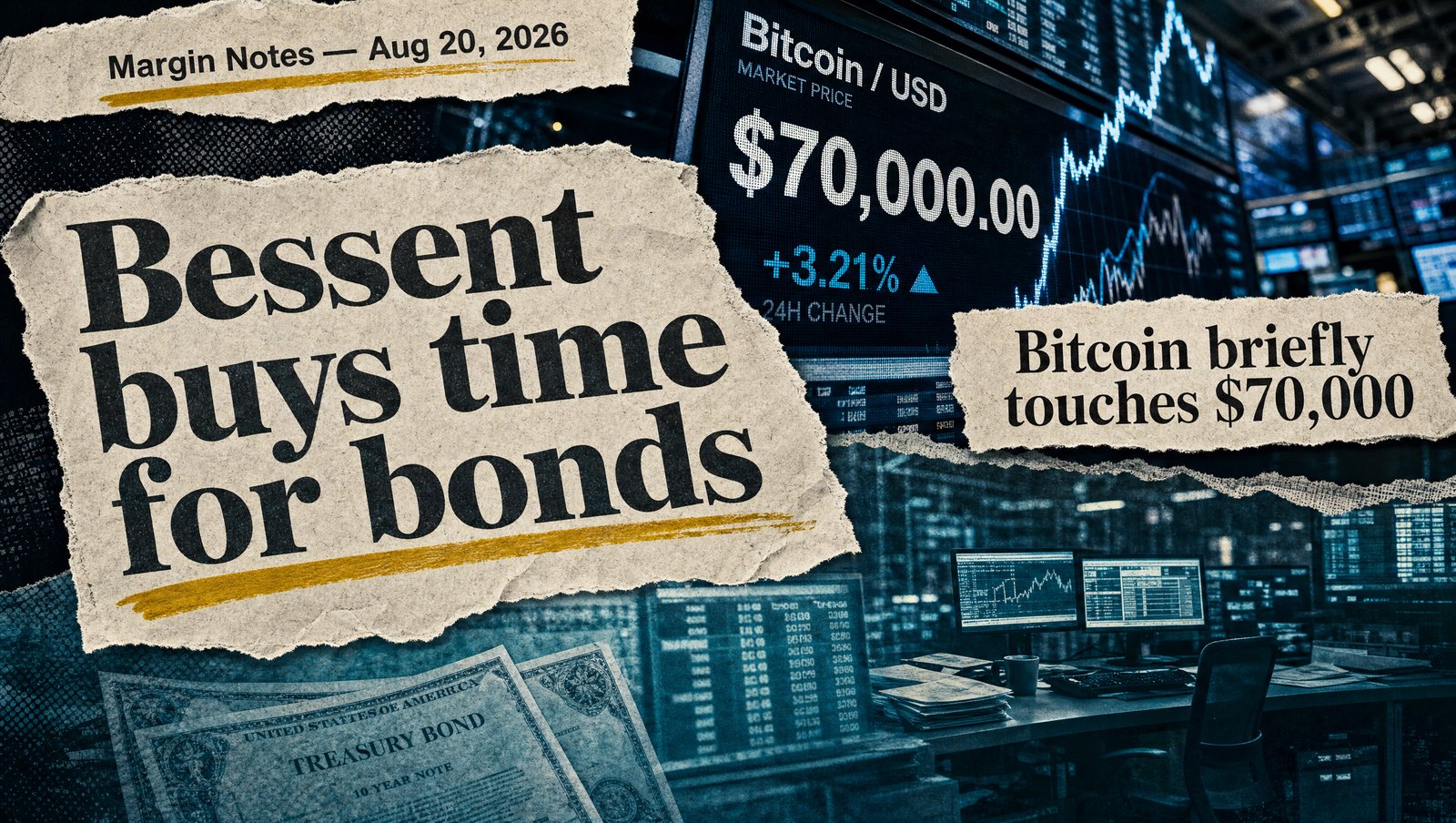
- Bitcoin: $70,000 — briefly reached the level for the first time since June.
- Ether: $2,250 — rose 18% during the broad digital-asset rally.
Bessent Buys Bonds as the Dollar Takes the Bill
Treasury Secretary Scott Bessent’s bond-buying initiative helped hold the US 10-year Treasury yield near 4.65%, while the S&P 500 gained 0.21%. The immediate result was familiar enough: bonds steadied, gold rose, and risk assets found a little more room to breathe. Bessent’s intervention is buying markets time, not removing the fiscal problem.
That distinction matters because US public debt has crossed $40 trillion, leaving investors to weigh a calmer trading session against a much larger financing burden. Treasury purchases can reduce pressure at the long end, but they cannot make interest payments disappear or persuade bondholders that supply will remain modest. The US debt load is turning interest expense into a market-wide question, which is why the dollar has fallen to a three-month low even as US borrowing costs remain high.
The US Federal Reserve’s July minutes add another complication. Support for a rate increase has grown, with markets assigning a 26% probability to a 25-basis-point move in September. Treasury policy may lean against yields while the US Fed debates whether inflation still requires restraint. One institution is trying to lower the cost of money; the other is explaining why it may not be ready to do so. Investors, naturally, would prefer both answers at once.
Bitcoin Turns Policy Relief into Forced Buying
Bitcoin briefly touched $70,000, while ether climbed 18% to $2,250 as easier bond-market conditions and regulatory optimism turned a cautious digital-asset trade into a rapid repricing. Bitcoin’s rally forced $2.7 billion of bearish positions to close, making the move less a clean referendum on fundamentals than a reminder that leverage is an excellent accelerant and a poor risk manager.
The spot market did provide real support. Bitcoin exchange-traded funds attracted $517 million on August 19, while ether funds drew $189 million, their strongest combined showing in months. Institutional flows returned just as short sellers supplied the fuel. That combination can carry prices higher, but it also leaves the market vulnerable to the next disappointment if inflows slow or bond yields resume their climb.
Policy is becoming part of the plumbing rather than merely the backdrop. President Donald Trump is pressing Congress to advance the Clarity Act, and the US Commodity Futures Trading Commission is working on a path for Hyperliquid to operate domestically. Coinbase’s Base app is adding access to more than 290 perpetual markets with leverage of up to 50 times. Regulation may bring trading activity onshore, but it will not make 50-times leverage behave like a savings account.
Iran Escalation Keeps the Inflation Route Open
Brent crude reached $92.14, up 0.57%, after the United States said it was beginning an economic-warfare campaign against Iran. The US government is widening pressure on Iran without closing the supply question, leaving energy markets to price the risk that shipping, insurance, and regional trade become more expensive before physical production is materially lost.
That is enough to complicate the relief created by Treasury buying. Energy stocks fell 0.31%, yet gold remained near $4,550.50 and Brent was still 26.7% above its level at the start of the war. Markets are not pricing an instant shortage; they are charging for the possibility that every shipment takes longer and arrives with a larger bill attached. For the US Federal Reserve, that is an awkward form of inflation because it can persist even while demand cools.
The broader response was restrained. The S&P 500 and Nasdaq both rose, and the VIX fell 6% to 14.89, suggesting investors accepted the geopolitical risk premium rather than treating it as a reason to abandon every position. The calm is conditional, however. Treasury purchases can soothe the bond market, but they cannot negotiate the next cargo through a contested route.
Elsewhere
- Moderna shares surged 176.97% after a cancer-vaccine development sparked a broad biopharmaceutical rally.
- Marvell shares jumped 9.85% after a reported Google chip agreement, while Broadcom shares fell 4.61%.
- India’s Reserve Bank kept its policy rate steady, although hawkish meeting minutes pushed traders to consider future increases.
- China sentenced Evergrande founder Hui Ka Yan to life in prison, giving the property bust an unusually final footnote.
- Samsung Electronics shares rose 9.49% ahead of a planned shareholder-return package worth more than $72 billion.
- Chinese technology shares gained on Alibaba’s AI momentum, with the company leading the country’s major tech stocks this quarter.
- HSBC and Standard Chartered completed a live transaction on Swift’s 24/7 ledger, testing blockchain settlement inside conventional banking rather than beside it.