The Day in Numbers
- S&P 500: 7,691.76 — fell 0.69% as rising bond-market anxiety pressured equities.
- Nasdaq: 26,289.71 — dropped 1.33%, with information technology down 1.93%.
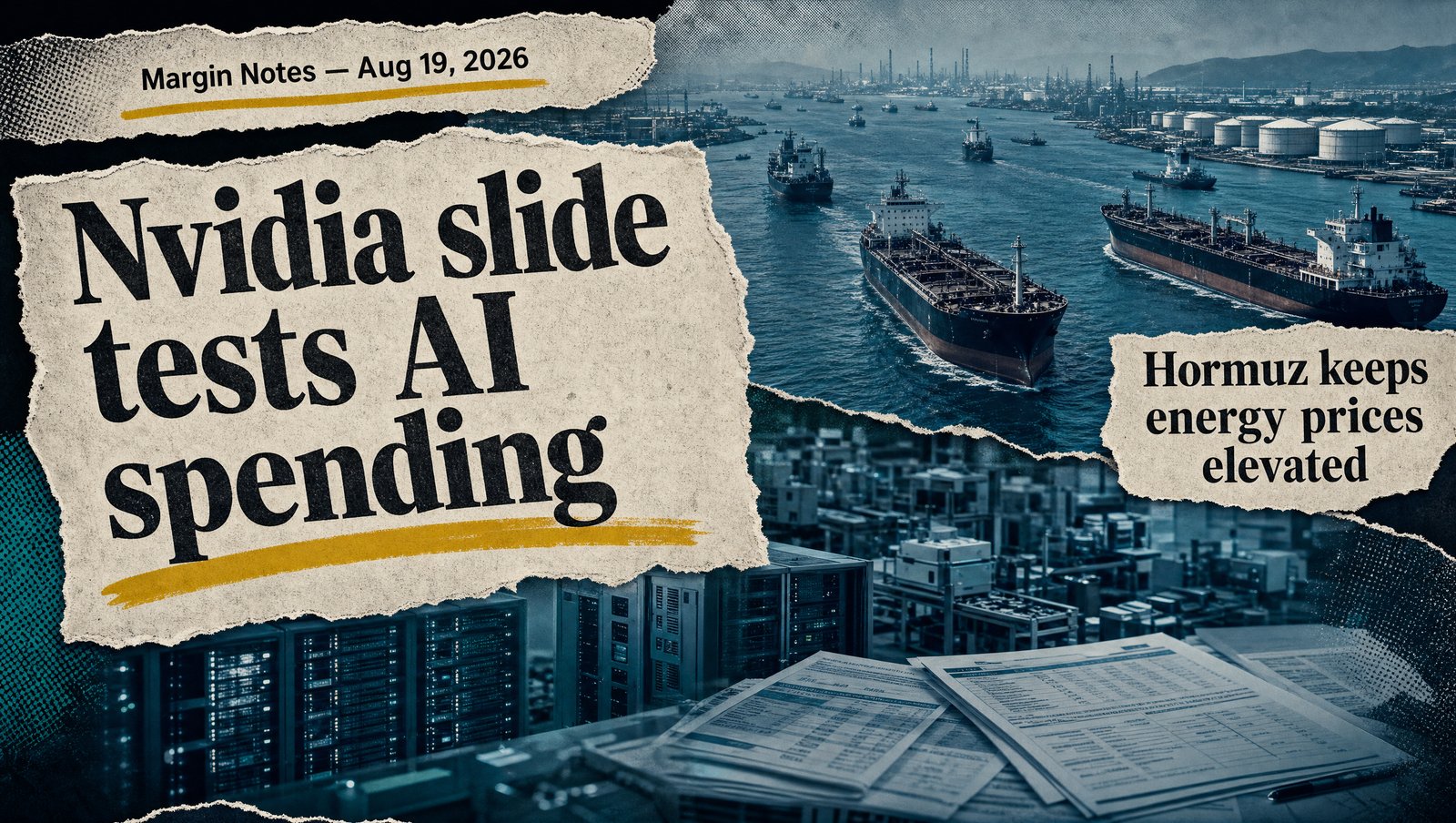
- Nvidia: $219.74 — declined 2.34% as investors questioned the durability of AI spending.
- US 10-year Treasury yield: 4.68% — remained elevated while the longer end of the curve stayed under pressure.
- US 30-year Treasury yield: 5.269% — kept long-term borrowing costs near levels that challenge ambitious investment plans.
- Crude oil: $85.50 — rose 0.66% as supply and shipping risks persisted.
- Brent crude: $91.57 — gained 0.60% and remained 26.3% above its level at the start of the conflict.
Nvidia’s Slide Makes AI Spending Prove Its Worth
Nvidia fell 2.34% to $219.74, helping drag the Nasdaq down 1.33% as investors became less willing to treat every AI infrastructure project as an automatic winner. Nvidia’s retreat is forcing AI enthusiasm to justify its financing, particularly with the US 30-year Treasury yield at 5.269% and technology stocks facing a discount rate that no longer behaves like a courtesy.
The pressure is broader than one company. Information technology fell 1.93%, Japanese equities dropped 3.16%, and Korean semiconductor shares slid more than 7% as bond anxiety travelled into the sector most dependent on long-dated growth. Bank of America sees a substantial valuation gap if AI capital spending fails to produce the returns investors expect, while the more optimistic case argues Nvidia could still rise sharply. Both views can coexist when the question is not whether AI works, but how much investors should pay before it does.
That question becomes more urgent with the US Federal Reserve’s minutes due at 2 p.m. Eastern time. The target federal funds range was held at 3.5% to 3.75% at the July meeting, but the minutes will be read against a bond market that is already setting its own terms. A pause in official policy is not the same thing as cheap capital, and companies building data centers are discovering the difference in real time.
Hormuz Keeps Energy Prices on Alert
Crude oil reached $85.50, up 0.66%, while Brent traded at $91.57 as the standoff around the Strait of Hormuz continued to disrupt confidence without removing every barrel from circulation. Hormuz uncertainty is keeping a premium in the price of moving energy, with daily ship transits down by 102 and Brent still 26.3% above its level when the conflict began.
The supply picture is tightening at the margin as well. Adnoc is cutting shipments to Asia, a decision that sends its flagship grade higher even while the wider market remains supplied. That is the sort of development that irritates inflation forecasts without producing a cinematic shortage: longer routes, higher insurance, and fewer comfortable assumptions about the next cargo.
Energy stocks gained 1.79%, while the FTSE 100 edged up 0.07% and the S&P 500 fell 0.69%. The split says investors are not treating the situation as a full-blown supply collapse. They are assigning more value to producers and less to businesses whose margins depend on stable transport and falling input costs. For the US Federal Reserve, the uncomfortable part is that the inflation risk can rise before economic growth does.
Citi Builds the Crypto Door as Bitcoin Accumulates
Citi plans to launch Bitcoin custody for institutional clients later this year, giving traditional asset managers a familiar operational route into an asset class that has spent years asking banks to take it seriously. Citi is bringing Bitcoin custody into the standard institutional toolkit, while large holders have added $2.9 billion to their positions over the past 60 days. Adoption is becoming easier to arrange even as the macro backdrop becomes harder to ignore.
That distinction matters because institutional plumbing and daily price momentum are separate things. Bitcoin held near $64,000, with Solana leading major digital assets higher, even as global bond yields tested the argument that Bitcoin automatically functions as a hedge against fiscal stress. A high-yield environment can support the long-term case for scarce assets while still making investors reduce exposure to anything that trades like a high-beta position. Markets are perfectly capable of admiring an asset and selling it at the same time.
Regulation is moving in the same practical direction. The US Securities and Exchange Commission has proposed registration exemptions for some digital-asset offerings, giving crypto issuers a clearer route through the compliance maze. The proposal does not erase volatility, leverage, or bad engineering, but it lowers one kind of friction. Citi’s custody plans lower another. What remains is the old-fashioned test: whether demand survives once financing is no longer free and enthusiasm has to share the room with risk management.
Elsewhere
- The US government paused proposed 50% tariffs on Canadian goods for three days while negotiators work toward a broader agreement.
- UK inflation climbed to a four-month high as higher energy bills complicated the Bank of England’s path toward lower rates.
- Carry traders shifted toward the Swiss franc after a volatility spike made yen-funded positions less comfortable.
- Meta shares fell 4.45% as a trial over alleged social-media addiction opened a new legal front for the company.
- China widened a $1.6 trillion fund’s permitted use to encourage housing-related spending and support domestic demand.
- Maya Protocol lost $11 million in pool value after attackers exploited flaws in its cross-chain trading system.