The Day in Numbers
- S&P 500: 7,745.06 — fell 0.52% as higher yields and geopolitical tension weighed on equities.
- Nasdaq: 26,644.91 — declined 0.32%, despite continued enthusiasm for AI spending.
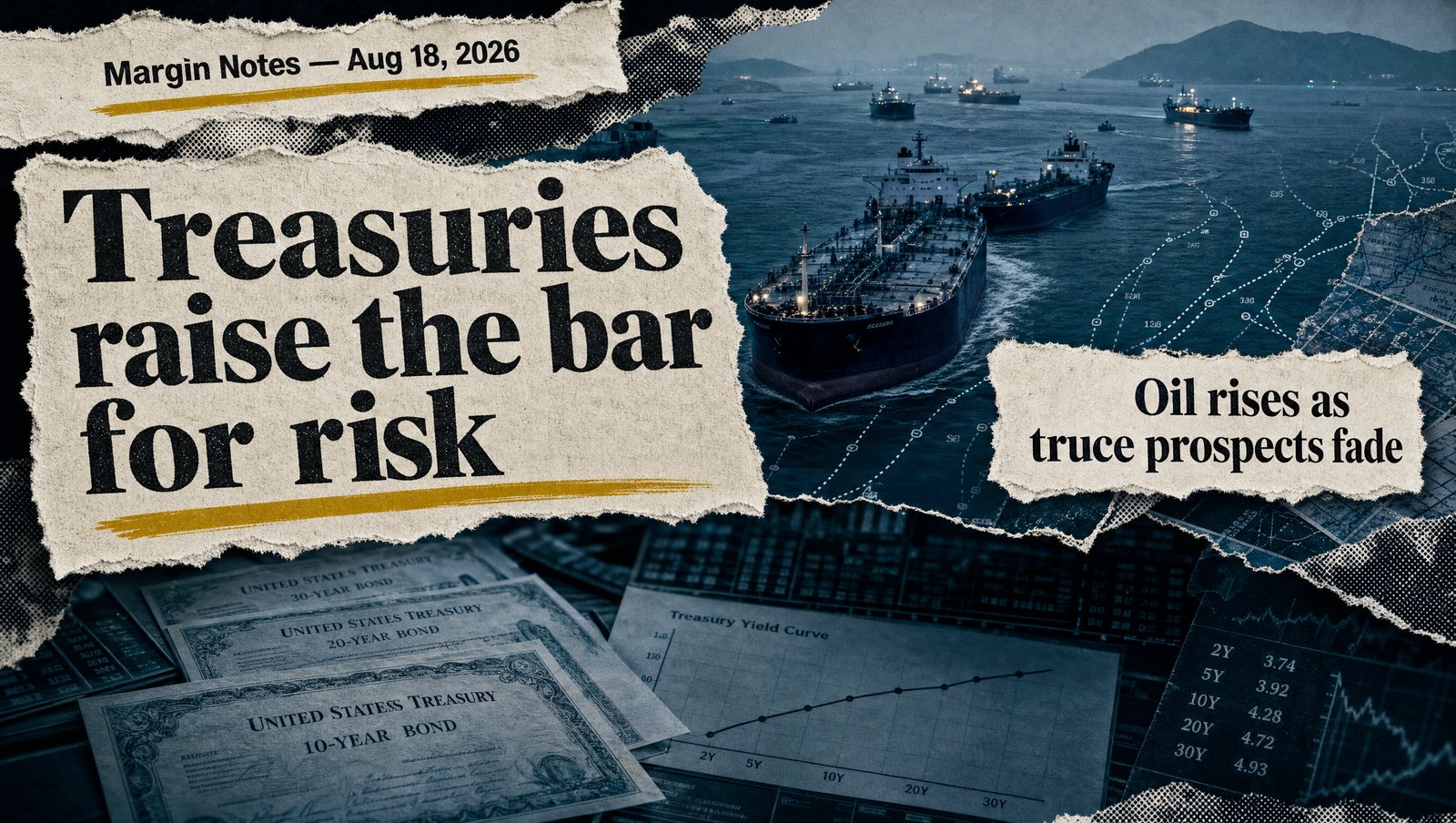
- US 10-year Treasury yield: 4.74% — reached a level that keeps discount rates uncomfortably high.
- Crude oil: $85.33 — rose 0.98% as shipping risks around the Strait of Hormuz intensified.
- Brent crude: $91.49 — gained 0.68%, up 26.5% since the conflict began.
- Gold: $4,453.00 — slipped 0.46% as investors favored the higher-yielding dollar over a traditional haven.
- Bitcoin: $64,284.08 — rose 1.29%, even as weekly exchange-traded-fund outflows reached $390 million.
US Treasuries Make Investors Pay for Optimism
The US 10-year Treasury yield reached 4.74% while the S&P 500 fell 0.52%, putting the day’s central argument in plain view: growth can still attract capital, but it no longer gets a free pass from the bond market. Long-term borrowing costs are at their highest levels in decades, and the US 30-year yield has reached its highest point since 2007. US Treasuries are raising the hurdle for every risk asset, from expensive technology projects to companies whose valuation depends on earnings several years from now.
That pressure is arriving from both sides of the ledger. Governments are issuing more debt, while the AI boom is encouraging large technology companies to borrow heavily for data centers and computing capacity. Alphabet has begun an Australian-dollar bond sale to help fund that spending, adding corporate supply to a sovereign market already asking investors to absorb a considerable amount of paper. The US 10-year yield was effectively flat at 4.74%, but a quiet benchmark can still sit inside a noisy repricing.
Gold fell 0.46% to $4,453.00, and the US dollar index edged up 0.04%. That combination suggests investors are not fleeing all risk; they are becoming more discriminating about what risk deserves funding. Goldman Sachs still argues that the US Federal Reserve is unlikely to raise rates in September, but a pause from the US Fed does not automatically make long-duration assets cheap. The bond market has its own opinions, and it has recently discovered volume.
Oil Climbs as the Truce Loses Ground
Crude oil rose 0.98% to $85.33 after President Donald Trump rejected an extension of the US-Iran truce, while vessel traffic through the Strait of Hormuz has fallen by 102 ships since the war began. The US-Iran standoff is keeping barrels available but routes uneasy. That distinction matters because the immediate risk is not necessarily a sudden disappearance of supply; it is a steadily higher premium on moving, insuring, and financing it.
Brent crude reached $91.49, up 26.5% since the conflict began, while energy stocks gained 0.87. Asian equities, by contrast, weakened as rising oil prices outweighed encouraging earnings. A vessel was struck by an unidentified projectile and one person was killed, adding another physical incident to a diplomatic relationship already short on spare optimism. Oil prices are carrying the geopolitical warning into the inflation outlook, even while gold declined and broader equities absorbed the shock rather than collapsing under it.
That leaves investors facing an awkward combination: the US Federal Reserve may not need to tighten further, yet energy and freight risks can keep inflation elevated enough to delay relief. Higher oil does not have to produce a supply crisis to damage confidence. It only needs to make the next shipment, factory run, or consumer purchase slightly more expensive, repeatedly, until the arithmetic becomes visible in earnings.
Bitcoin Finds Buyers, While the Rest of Crypto Finds Gravity
Bitcoin traded above $64,000, reaching $64,284.08, while Ethereum slipped to $1,900.52 and XRP fell below $1. The divergence is useful: digital assets are not moving as one trade, even as the wider backdrop becomes less hospitable. Bitcoin is attracting selective demand rather than a broad crypto bid, with the token gaining 1.29% while institutional ETF flows remain cautious.
The caution is measurable. Bitcoin exchange-traded funds recorded a $390 million outflow week, and leveraged longs are stacked in a market with thinning liquidity. A modest rally can therefore coexist with a fragile structure, because the marginal buyer and the forced seller are not the same person. Strategy raised $334 million through share sales without purchasing additional Bitcoin, while Paul Tudor Jones’s firm returned to the BlackRock Bitcoin ETF after a year away. One institution is preserving ammunition; another is reopening the position. Neither behavior resembles indiscriminate enthusiasm.
Ethereum offers a different institutional signal. Bitmine bought another $19 million of ETH and now holds roughly 4.8% of total supply, while the next Ethereum upgrade carries 66 proposals, including a privacy-related change. Those developments suggest that the longer-term infrastructure story is still developing, but the daily price action is less forgiving. Bitcoin can rise when the broader risk trade is under pressure, yet the rest of crypto still has to prove that buyers are willing to fund the thesis at today’s yields.
Elsewhere
- Microsoft shares fell 3.04% to $480.35 as China accelerates the removal of US software from state agencies.
- AI chip stocks rallied, with SanDisk up 8.88% and Coherent up 7.79%, as investors grew more confident in corporate spending on computing capacity.
- UK payrolls declined and vacancies reached a five-year low, adding evidence that labor-market momentum is cooling.
- Meta faced a major social-media addiction trial, placing fresh legal pressure on a company already exposed to changing technology rules.
- New US tariffs on Canada could take effect Wednesday, leaving manufacturers to price another possible disruption before the policy is fully settled.
- A Coldcard software flaw enabled roughly $100 million in hacked funds, reviving uncomfortable questions about whether hardware wallets deserve the trust attached to them.
- SpaceX shares gained 4.45% to $146.23, extending the private-market technology rally even as listed mega-cap shares were mixed.