The Day in Numbers
- S&P 500: 7,723.55 — slipped 0.17% as investors trimmed exposure to growth stocks.
- Nasdaq: 26,363.44 — fell 0.83% as chip and software shares weakened.
- Dow Jones Industrial Average: 54,349.12 — gained 0.49% for a third consecutive record close.
- SpaceX: $108.27 — dropped 13.61% as investors questioned the cost of its AI spending.
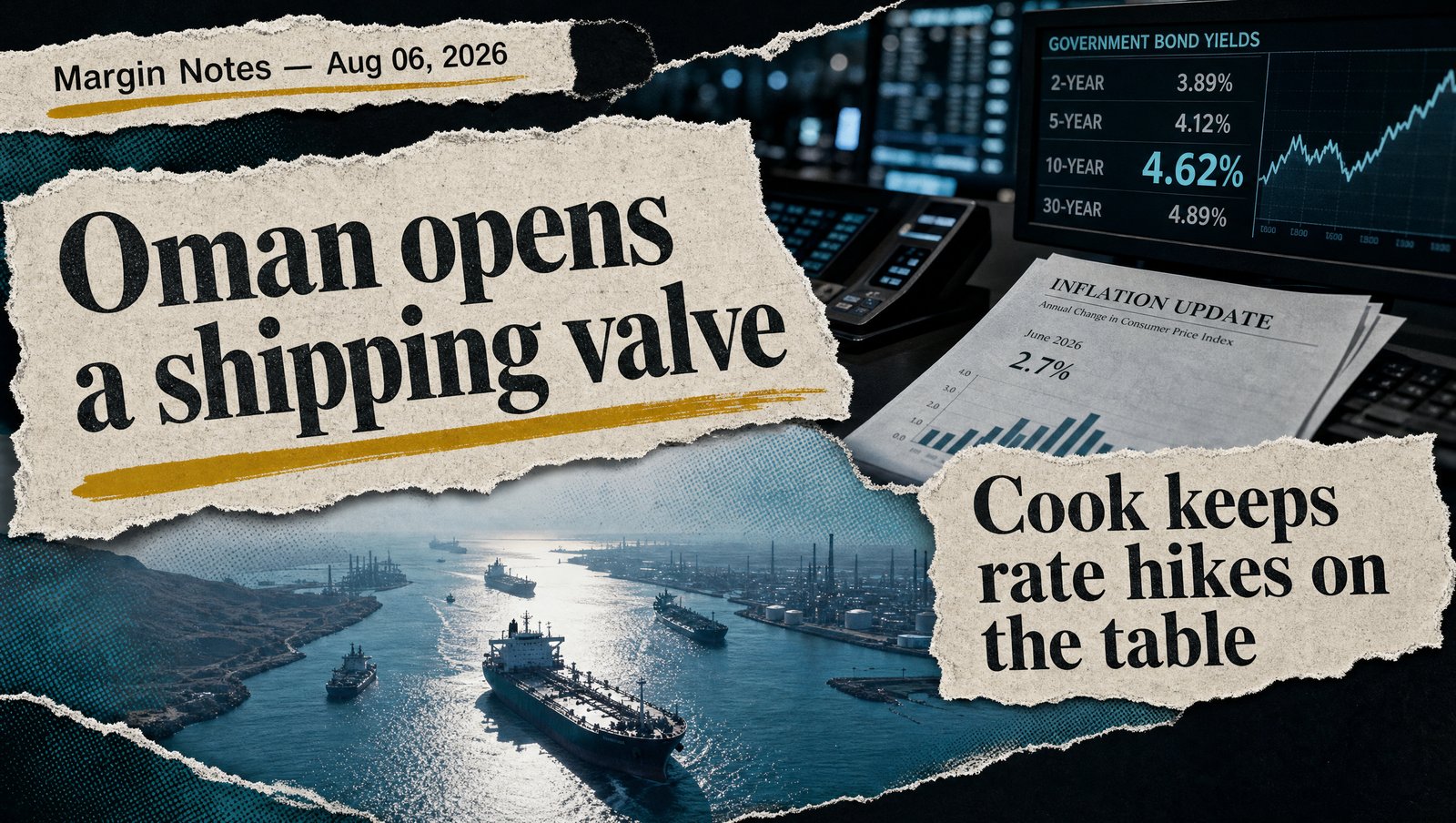
- US 10-year Treasury yield: 4.62% — held steady as higher-for-longer policy remained the bond market’s baseline.
- Crude oil: $75.60 — rose 0.51% while the Iran-Oman shipping agreement was assessed.
- Gold: $4,313.20 — added 0.19%, keeping a modest hedge in place despite calmer shipping headlines.
Iran and Oman reopen the shipping question
Iran and Oman announced an agreement on Strait of Hormuz shipping, giving energy markets their first diplomatic mechanism for reducing the traffic disruption rather than merely discussing it. Tehran and Muscat agreed to stabilize Hormuz shipping. The distinction matters because the waterway does not return to normal simply because officials issue a joint statement. Insurers, shipowners, port operators, and crews all have to believe the statement will survive contact with reality.
Crude oil still rose 0.51% to $75.60, while Brent gained 0.34% to $79.72. That is a restrained response to a potentially important breakthrough, which suggests traders are treating the agreement as a cap on further escalation rather than a guarantee of restored supply. Gold climbed 0.19% to $4,313.20, so the market has reduced some geopolitical urgency without throwing away the umbrella.
Cook keeps 4.62% yields tied to inflation
US Federal Reserve Governor Lisa Cook said she would be prepared to raise rates if inflation fails to cool, while the US 10-year Treasury yield remained at 4.62%. Lisa Cook kept a rate increase in the policy toolbox, which is not the language investors reach for when they are hoping the next move is an easy cut. It also reinforces the view that softer hiring and weaker technology shares will not automatically produce a softer US Federal Reserve stance.
That tension showed up in the equity split. The Dow rose 0.49% to a record 54,349.12, but the S&P 500 fell 0.17% and the Nasdaq dropped 0.83%. Defensive sectors did better, with health care up 1.54% and financials gaining 1.34%, while communication services fell 2.03%. Doubts about US assets are returning to the allocation debate, and a steady 4.62% long bond gives that debate a fairly stubborn reference point.
Visa and Circle turn stablecoins into infrastructure
Visa expanded stablecoin payout capabilities through Zerohash, moving digital dollars further into the machinery of ordinary payments rather than leaving them as a specialist trading instrument. Visa widened stablecoin payouts through payment infrastructure. That is the useful part of the crypto story today: not a token promising to reinvent money, but a payments network finding a way to make settlement more flexible. Finance occasionally advances by adding a new rail instead of demolishing the station.
Circle is preparing a September launch for its Arc blockchain with Visa, Mastercard, and BlackRock among the validators, while Bitcoin has remained notably less responsive than US equities. Circle recruited major financial institutions as Arc validators, giving institutional credibility to the network before it has to prove its economics. Meanwhile, the S&P 500 has absorbed roughly $2 trillion in market value this month while crypto has not matched the move. The divergence says capital is still willing to buy technology, but it wants clearer cash flows and fewer custody footnotes.
Elsewhere
- SoftBank beat profit expectations after gains from chip investments kept the AI capital cycle in view.
- German factory orders exceeded forecasts, offering a small counterweight to the US-led growth worries.
- Commerzbank announced a €1.2 billion buyback as potential UniCredit discussions added a strategic subplot.
- Nintendo topped estimates on strong game sales and tariff refunds, proving that not every successful quarter requires a server farm.
- Wizz Air reported a quarterly loss and warned that operating conditions would remain difficult.
- Block cut its workforce by 40% for AI, with earnings suggesting the efficiency drive is beginning to show results.
- Chime raised its 2026 revenue forecast on strong demand while its chief financial officer prepared to leave.