The Day in Numbers
- S&P 500: 7,736.52 — rose 1.79% to a record as hopes for a Hormuz agreement improved sentiment.
- Nasdaq: 26,584.99 — gained 2.59% as technology shares led the advance.
- Palantir: $162.66 — jumped 29.45% after another strong AI-driven performance.
- Crude oil: $75.27 — fell 0.66% as diplomatic progress reduced the supply-risk premium.
- US 10-year Treasury yield: 4.60% — held firm despite the equity rally and softer oil.
- Gold: $4,232 — gained 1.91%, keeping a hedge in the portfolio while stocks climbed.
- Coldcard exploit losses: approximately $114 million — the latest estimate from an active Bitcoin wallet breach.
Hormuz optimism sends oil lower and equities higher
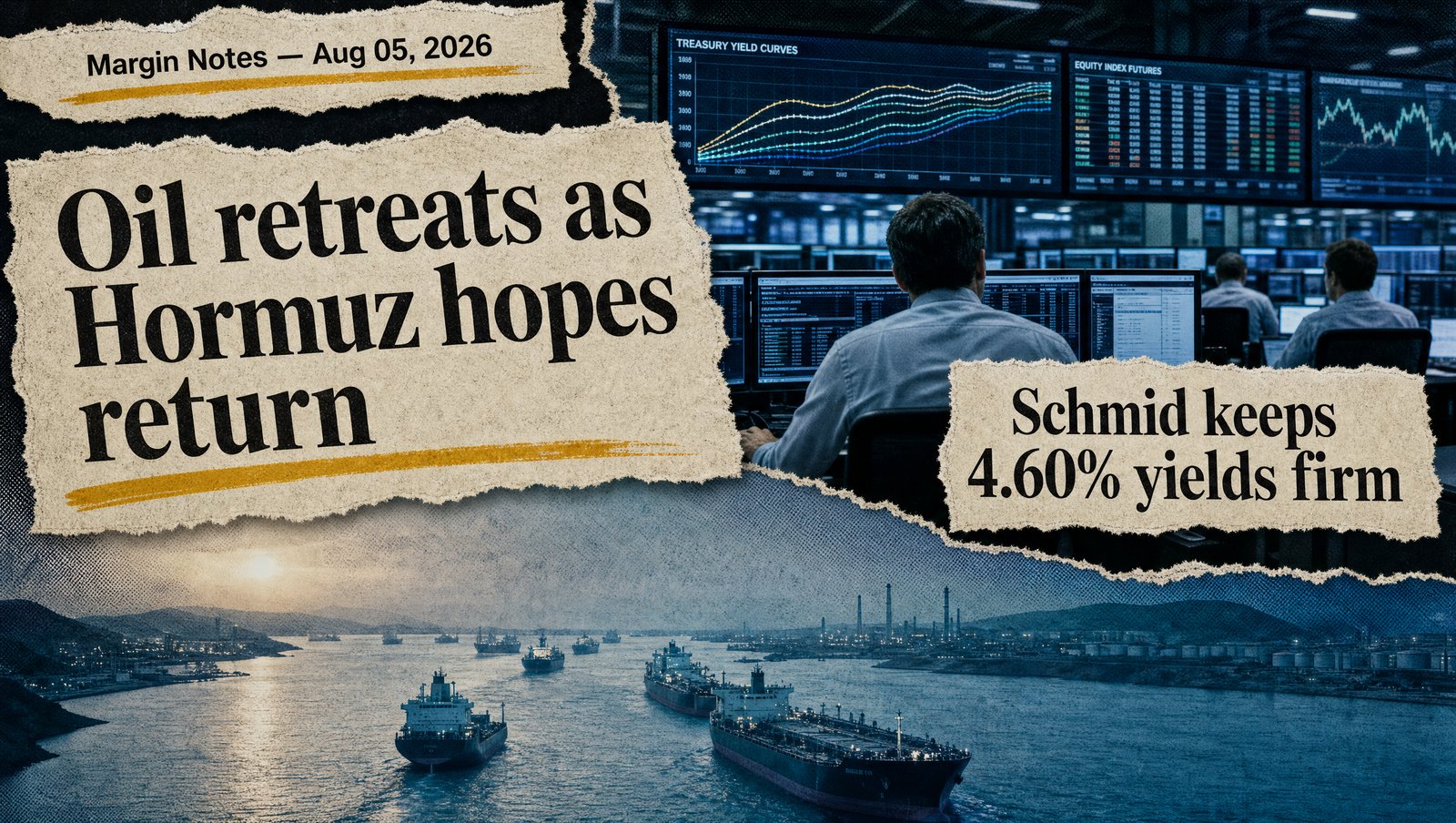
Crude oil settled at $75.27 after President Donald Trump said US-Iran negotiations were progressing, while the S&P 500 rose 1.79% to 7,736.52. Diplomatic progress has taken some heat out of the energy premium, which is the market’s preferred way of saying that fewer ships may be at risk without promising that the waterway is fully normal again.
The equity response was broader than the commodity move. The Nasdaq gained 2.59%, and the Dow rose 1.71%, while gold climbed 1.91% to $4,232. That combination is not quite the clean risk-on signal it appears to be. Investors are buying the possibility of cheaper energy and steadier trade, but they are still paying for protection. Oil has retreated; caution has merely changed seats.
The next test is whether a diplomatic announcement becomes an operating arrangement. A lower risk premium can arrive in a headline, while restored shipping capacity requires paperwork, insurance, and ships that are willing to return. Markets are pricing the first step. The second remains on probation.
Schmid keeps 4.60% yields firm against the rally
The US 10-year Treasury yield held at 4.60% as US Federal Reserve Governor Michelle Bowman Schmid argued that tighter policy is still needed to bring inflation down. A US Fed official is putting inflation ahead of an easier financial backdrop, which explains why a record equity close did not pull long-dated yields lower.
That message lands awkwardly beside softer oil and signs of a cooling labor market. Job openings fell to a three-month low, but that is not yet enough to persuade markets that inflation has been defeated. The MarketWatch probability gauge showing an 89% chance of no US Fed rate cuts in 2026 captures the mood: growth may be slowing at the margin, yet policy is not being invited to the rescue.
Currency policy adds another layer. USD/JPY stood at 157.64, down 0.09%, while the US Dollar Index slipped 0.07%. Scott Bessent is treating the yen as a policy problem rather than a market inconvenience, making exchange rates part of the official conversation at exactly the moment bond traders would prefer fewer variables.
Bitcoin holds steady while crypto infrastructure splits in two
Bitcoin traded broadly sideways even as global equities reached records, leaving digital assets with less of the day’s enthusiasm than the Nasdaq. Bitcoin has not followed stocks higher with any urgency, a reminder that risk appetite is not a single switch and that crypto investors still have their own list of reasons to hesitate.
The most immediate reason is operational. Coldcard urged users to move funds while an exploit remained active, with losses estimated at approximately $114 million. The wallet maker is telling customers that self-custody is temporarily the riskier choice. That is a damaging message for a product category whose central selling point is that users should not have to trust an intermediary. The irony is not subtle, although the code apparently was.
Institutional adoption is moving in the opposite direction. BlackRock has opened tokenized access in Europe to a $311 billion money-market fund, while an Ethereum proposal would reduce new issuance if staking reached a specified threshold. Wall Street is adding blockchain rails even as crypto users question the hardware beneath them. The split matters: capital markets are becoming more comfortable with tokenized settlement, but retail confidence still depends on whether a device can keep its keys where they were left.
Elsewhere
- SpaceX posted a 92% revenue jump, but investors focused on the cost of its artificial-intelligence ambitions rather than the headline beat.
- AMD shares gained 7% as the chipmaker’s results kept the semiconductor trade alive, even while investors continued to scrutinize AI spending.
- Honda raised its outlook by 30% as US demand and currency effects lifted the Japanese automaker’s profit expectations.
- Nigeria approved tokenized assets, giving blockchain-based capital-market products a clearer regulatory route in Africa.
- Wells Fargo began preparing tokenized deposits for commercial clients, extending banks’ effort to move settlement into continuous operation.
- China sold long-dated offshore yuan bonds at record-low yields, showing strong demand for the country’s debt even as global investors debate currency direction.
- OpenAI agreed to pay $3.2 million to settle discrimination claims brought by US workers.