The Day in Numbers
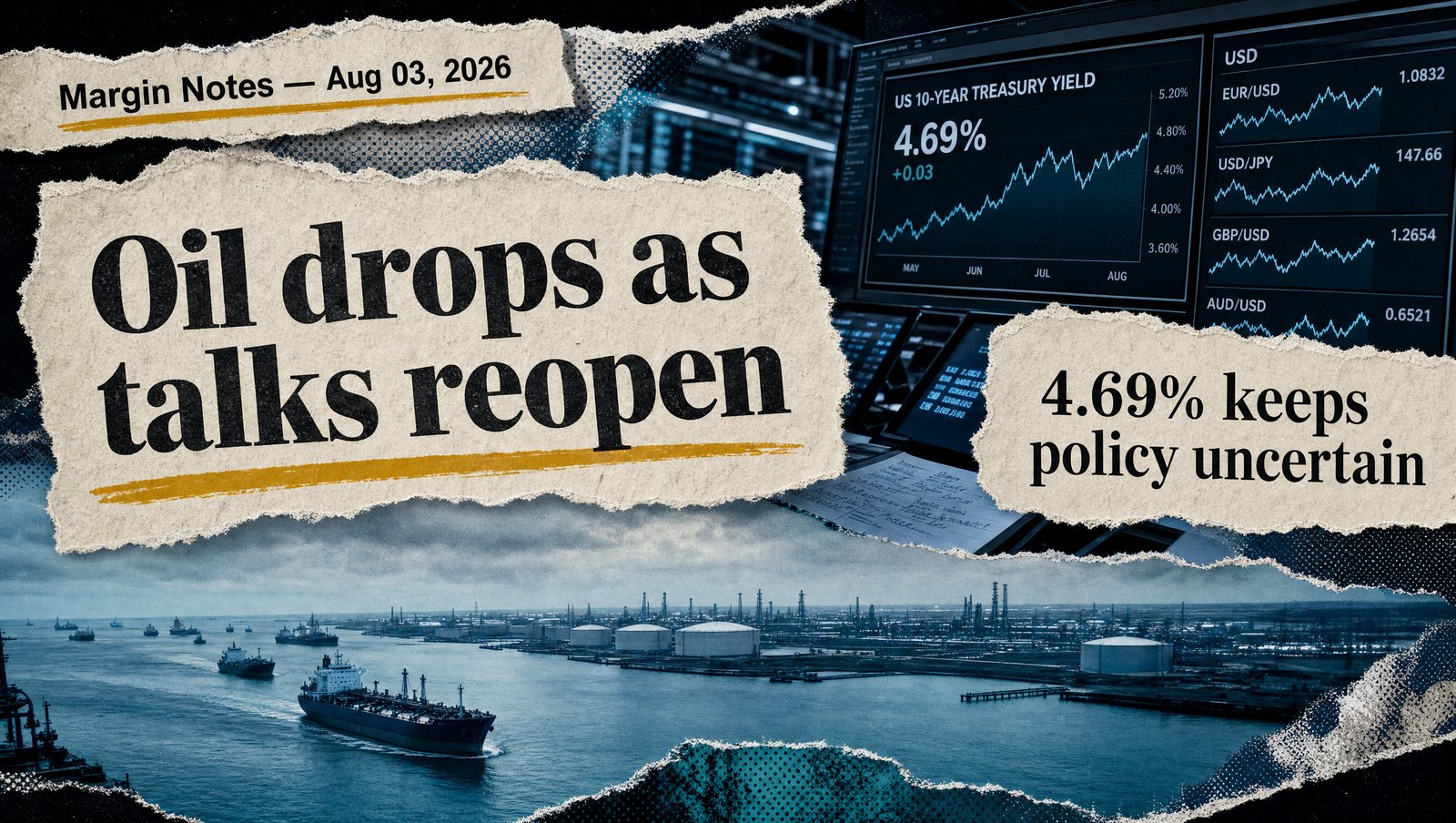
- Crude oil: $79.11 — fell 6.57% as hopes for US-Iran talks reduced supply-disruption fears.
- S&P 500: 7,489.72 — gained 0.70% as geopolitical pressure eased.
- Nasdaq: 25,373.85 — rose 1.00%, despite weakness in information technology.
- US 10-year Treasury yield: 4.69% — remained elevated as policy uncertainty kept bonds uneasy.
- USD/JPY: 156.743 — declined 0.42% as coordinated currency action supported the yen.
- Gold: $4,120.50 — edged up 0.33% even as oil’s risk premium collapsed.
- Consumer discretionary sector: +6.07% — led the US equity advance by a wide margin.
Washington Opens Talks and Oil Drops 6.57%
Crude oil fell 6.57% to $79.11 after President Donald Trump said US-Iran talks would begin Monday, reversing much of the supply-risk premium built into energy markets last week. Washington put diplomacy back in the price of oil, and the market responded with the efficiency of a machine that has been waiting for exactly one sentence. The S&P 500 gained 0.70%, while gold rose only 0.33%, suggesting investors were reducing their demand for protection rather than abandoning caution altogether.
OPEC+ is adding a smaller, separate piece to the same puzzle by unwinding the remainder of its 2023 production cuts. The combination of a possible diplomatic opening and slightly greater supply leaves energy markets with fewer reasons to bid aggressively, although it does not make the underlying conflict irrelevant. A ceasefire can lower the premium quickly; repairing transport routes and refining capacity takes longer. For now, inflation traders have been handed better news, but the US Fed still has to decide whether lower oil is durable enough to matter.
The US Fed Calendar Loses Its Clock
The US 10-year Treasury yield finished at 4.69%, leaving bond traders with an elevated rate backdrop and fewer familiar signposts for deciding what comes next. US Fed Chair Kevin Warsh is reconsidering the policy calendar, raising the possibility that meeting frequency and timing could become less predictable. That may sound like administrative housekeeping, but markets use the calendar as part of the policy itself. Remove the timetable and every speech starts carrying a little more weight.
Currency markets are already operating under a similar warning. USD/JPY slipped 0.42% to 156.743 after the United States and Japan coordinated to support the yen, a move that signals the dollar’s strength is no longer being treated as a one-country problem. US and Japanese officials are putting a floor under currency disorder, which can steady funding markets but also unsettle carry trades built on the assumption that the exchange rate will keep drifting in one direction. The Nasdaq gained 1.00%, so investors have not turned defensive across the board. They are simply being reminded that liquidity has supervisors.
Coldcard Attack Sends Bitcoin Back to the Plumbing
Bitcoin slipped below $63,000 as the continuing Coldcard-linked attack unsettled holders, even though the geopolitical news offered risk assets a cleaner backdrop. Hackers have turned cold storage into an active market concern, with losses reported near $89 million and some investors moving coins toward exchanges rather than away from them. That reverses the usual custody instinct. In a crisis involving an exchange, users seek their own keys; in a crisis involving the keys, they seek someone else’s infrastructure. Security is apparently a matter of choosing which nightmare has better insurance.
The institutional question is becoming just as important as the technical one. A $165 million transfer from Trump Media’s Bitcoin holdings has raised uncertainty over whether the coins were sold, moved for custody, or pledged against borrowing, with the company’s next filing expected to clarify the position. Trump Media moved a large Bitcoin holding into question, and Strategy is watching its 200-week moving average as a long-term market health check rather than treating every dip as an invitation to buy. The asset still has institutional sponsors, but today’s lesson is less about conviction than control: who holds the coins, who can move them, and who has to explain the transaction afterward.
Elsewhere
- Alibaba introduced a new AI model with competitive benchmark results, keeping the technology race lively even as US information technology shares fell 0.54%.
- Japan’s Orix agreed to buy UK aviation specialist AerFin for $640 million, extending Japanese corporate acquisition activity into aircraft services.
- Vietnam recorded a $3.59 billion trade deficit as imports outpaced exports and added pressure to the country’s external-balance story.
- Prysmian agreed to acquire US electrical-equipment maker Atkore, adding another data-center and grid-infrastructure deal to the industrial consolidation list.
- Investors rotated toward financial stocks as traders weighed how the next US Fed decision could shape the rally’s staying power.
- A DeFi lender shifted toward institutional back-office work after building $260 million in outstanding loans and targeting $1 billion by year-end.
- US lawmakers face a narrowing window for crypto legislation before the Senate’s summer break interrupts the timetable.