The Squeeze Logic
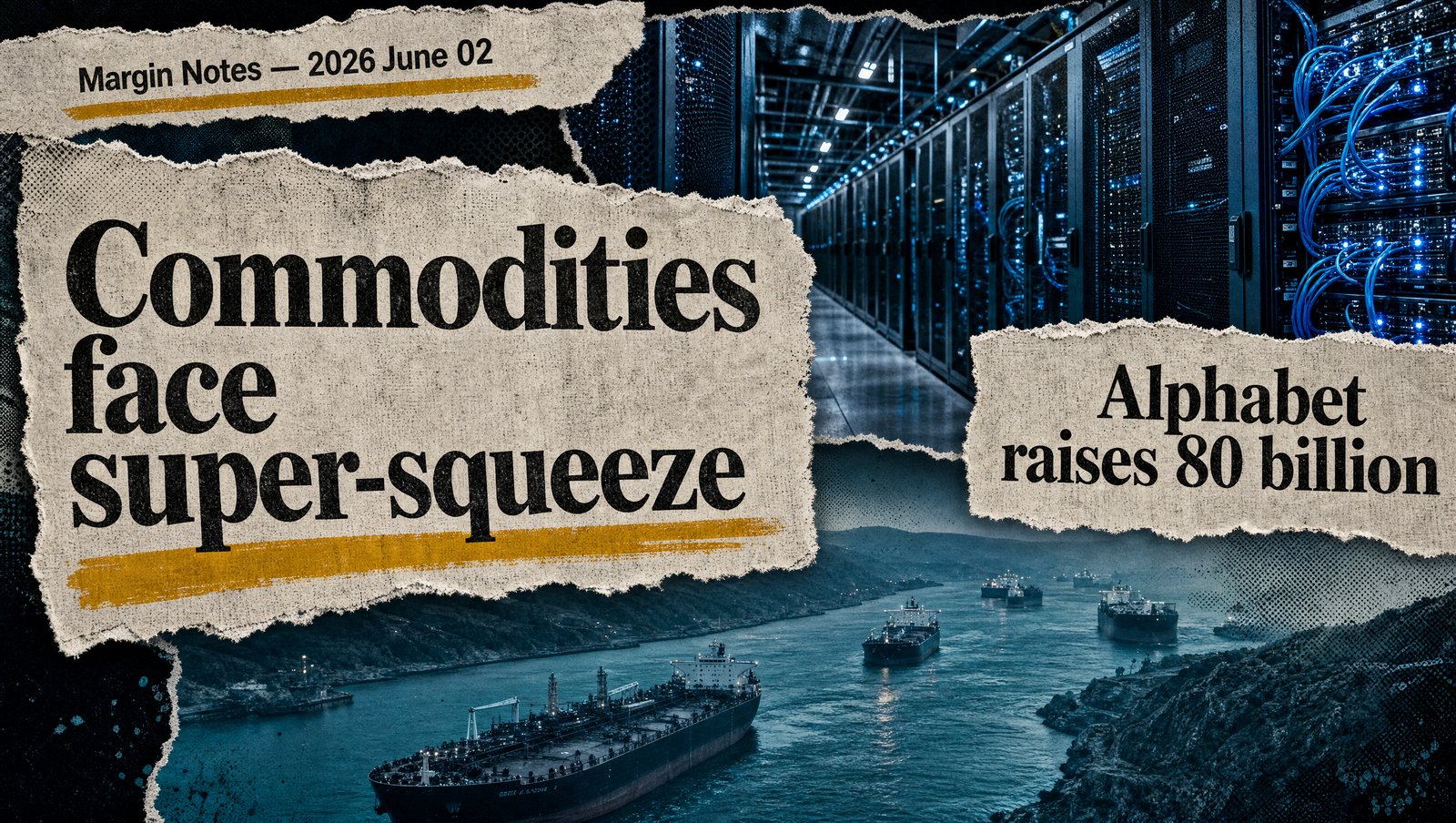
A handful of detained tankers in the Strait of Hormuz started as a logistical inconvenience last week. By Tuesday, the arithmetic of global energy trade had rewritten itself. Oil majors are rerouting fleets around the Cape of Good Hope, insurance premiums are spiking, and traders are pricing a structural shortage. HSBC warns of a commodity super-squeeze as the geopolitical standoff drags on. The market priced it in before the headlines even cooled. Every actor is acting rationally: shippers avoid the chokepoint, producers hoard capacity, and speculators front-run the shortage. The collective result is a market where energy prices refuse to dip back to pre-conflict levels, regardless of diplomatic chatter. The tell is that crude oil is holding above $91 despite resumed peace talks, signaling that the physical bottleneck matters more than the diplomatic one.
The downstream effect is a recalibrated risk premium across the entire energy complex. Traders are no longer betting on a quick resolution; they are calculating the duration of the disruption. This structural constraint forces the US Federal Reserve to weigh inflationary pressure against growth concerns, keeping rate cut expectations muted. The US 10-Year Treasury Yield sits steady at 4.43%, reflecting a market that accepts higher borrowing costs as the new baseline. Investors are treating the geopolitical noise as a permanent variable rather than a temporary blip.
The Equity Tap
The AI capital cycle has moved past the prototype phase and into heavy industrial financing. Alphabet is asking shareholders to fund an $80 billion equity raise to bankroll its infrastructure buildout. For context, that is roughly the entire market capitalization of a mid-cap energy major, deployed entirely into server racks and cooling systems. Anthropic files to go public after nearing a $1 trillion valuation, effectively leapfrogging OpenAI in the race for institutional capital. Look closer at the hardware layer, where companies like HPE and CoreWeave are printing record backlogs. The demand is no longer theoretical; it is a balance sheet reality. Investors are treating these capital raises as proof of concept rather than dilution events, driving the Nasdaq up 0.42% to 27,086.
The consequence is a clear bifurcation in equity performance. Technology and energy sectors are pulling ahead while consumer discretionary and real estate lag. The market is rewarding companies that can demonstrate tangible revenue growth from the AI buildout, regardless of broader economic headwinds. This concentration of capital creates a self-reinforcing loop where liquidity flows toward infrastructure winners, leaving legacy sectors to compete for scraps. The Nasdaq's strength masks underlying fragility in broader market breadth, but the momentum trade remains firmly intact.
The Treasury Flip
The corporate accumulation thesis for Bitcoin just hit a speed bump. MicroStrategy, once the poster child for holding digital assets, executed a $2.5 million sale that sent its stock sliding and rattled the broader crypto complex. Bitcoin ETFs suffered a record $3.4 billion in outflows across an eleven-day streak, marking the longest redemption run since the funds launched. Meanwhile, the Mt. Gox estate moved 10,422 Bitcoin worth roughly $739 million to a new wallet as creditor repayment deadlines approach. The desk chatter is focused on whether these dormant coins will hit the open market immediately or sit in cold storage for another decade. XRP fell below $1.30 as the broader risk-off sentiment dragged down altcoins. The structural plumbing is still expanding, but the short-term liquidity is clearly rotating out of the crypto bucket.
What follows is a period of heightened sensitivity to corporate balance sheet moves. Every large-scale transaction is now scrutinized for signals of broader treasury strategy shifts. The market is adapting to a reality where even the most vocal Bitcoin advocates may need to liquidate holdings for operational liquidity. This creates a temporary supply overhang that weighs on price action, even as long-term adoption metrics remain healthy. Traders are hedging against the possibility that more corporate treasuries will follow suit, keeping a lid on Bitcoin's recovery until the sell pressure stabilizes.
The Numbers
- S&P 500: 7,599.96 — +0.26% as tech gains offset energy volatility.
- Crude Oil: $91.65 — holding gains despite diplomatic thaw.
- Gold: $4,564 — +1.28% on safe-haven demand.
- US 10-Year Yield: 4.43% — steady on Fed policy bets.
- Bitcoin: ~$69,700 — down 3.4% on record ETF outflows.
- Alphabet: $80 billion — massive equity raise for AI infrastructure.
Elsewhere
- The US government cut tariffs on agricultural equipment to ease farm costs.
- China’s lab-grown diamond industry found a new use case in AI data center cooling.
- Short seller Andrew Left was found guilty of securities fraud in a landmark case.
- Australia raised its minimum wage by 4.75% amid reaccelerating inflation.
- Binance is preparing to launch tokenized US stocks on its platform.
- Japan’s ruling party proposed a legal framework for crypto ETFs and yen stablecoins.