Institutional Psychology: The Rate Trap
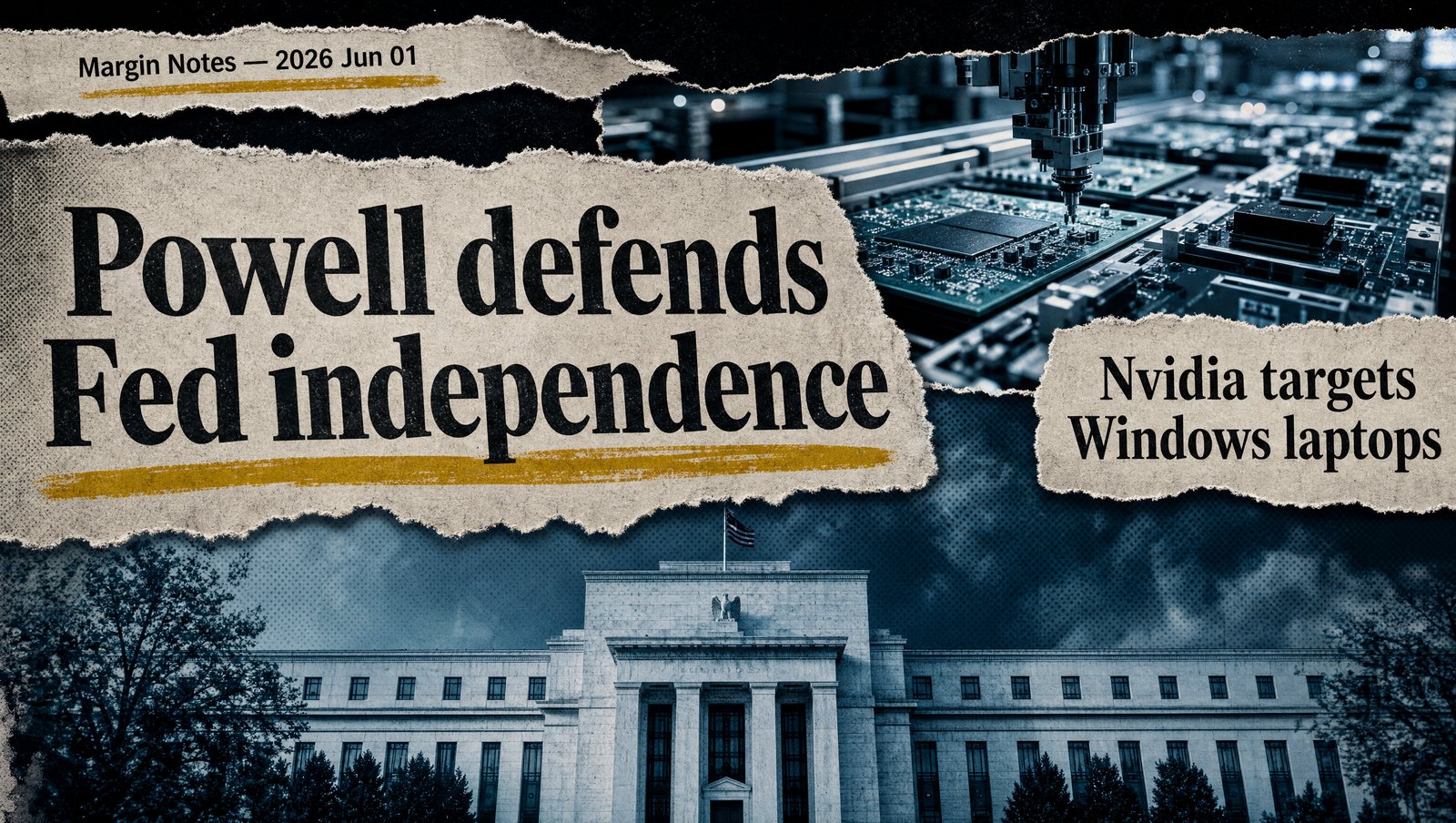
Jerome Powell warns that politicizing Fed will erode its credibility. The market is currently operating under a form of selective blindness. While the outgoing Fed Chair defends the institution's autonomy, the geopolitical reality is that US military launched strikes near Hormuz. Call it the cost of doing business. The US Federal Reserve is facing a structural constraint where it cannot simply ignore a three-year inflation high while the S&P 500 melts up on AI optimism. Crude Oil prices climbed back toward $100 a barrel, acting as a reminder that the physical world is still very much at war. One wonders if traders are simply betting that the growth in the AI sector is enough to offset a higher cost of capital.
The subtext is that the market is pricing the "peace premium" while ignoring the "inflation penalty." If the US Federal Reserve pivots to a hawkish stance to combat the inflation peak, the current risk-on momentum will hit a ceiling. It is a classic case of institutional psychology where the market prices the "peace premium" while ignoring the "inflation penalty." The US 10-Year Treasury Yield is holding steady at 4.46%, reflecting a steady rate path.
Compute Infrastructure: The Physical Layer
The transition of AI from a software narrative to a physical infrastructure race is genuinely impressive. We are seeing a massive deployment of capital into the actual concrete and steel of the digital age. While the tech trade is perceived by some as overcrowded, the institutional appetite for data center capacity remains voracious. Nvidia debuts processor for Windows laptops, taking on Intel and AMD in the consumer space. This move signals that the AI boom is moving beyond the US borders to establish regional hubs.
This momentum is manifesting in strategic geographic expansions. For instance, SoftBank overtakes Toyota as Japan’s most valuable company. This move signals that the AI boom is moving beyond the US borders to establish regional hubs. The result is a market where companies like Dell continue to soar on blowout demand, proving that the hardware layer is the only part of the trade with a tangible, physical floor.
The Derivative Migration: Regulated Rails
The crypto market is currently exhibiting a fascinating rotation. While the headline assets like Bitcoin and ether have struggled—with Bitcoin hovering around $73,000—the structural plumbing is becoming more sophisticated. We are seeing a move away from raw spot accumulation and toward regulated derivatives. This is a sign of maturation; the market is no longer just betting on a token price, but on the ability to hedge and leverage through official channels.
This is best evidenced by the fact that the CFTC approved Bitcoin perpetual futures on Kalshi, a move that provides a regulated venue for institutional speculation. The liquidity is already following, as Wintermute is providing liquidity on Kalshi and Polymarket. Meanwhile, the US government is using the same rails for statecraft, as the US government seized $1 billion in Iranian crypto. It is striking that while the tokens themselves are volatile, the rails are becoming a primary tool for both Wall Street and the US Treasury.
The Numbers
- S&P 500: 7,580.06 — +0.22% as tech strength offsets geopolitical noise.
- Crude Oil: 90.40 — +3.48% as peace deal optimism persists.
- Gold: 4,532.20 — -1.32% acting as a hedge against inflation.
- US 10-Year Treasury Yield: 4.46% — remaining steady.
- Bitcoin: $73,000 — struggling to find a floor.
- Bitcoin/Ether ETFs: -$2 billion — combined loss in late May.
A Few Last Things
- China factory activity stalled in May as demand weakened.
- A Danish pension fund blacklisted SpaceX over catastrophic governance concerns.
- Eli Lilly reached a 1 trillion valuation as the ultimate weight-loss play.
- XRP ETFs added 35 million in late May while other funds saw outflows.
- The NYSE parent is studying Hyperliquid to learn from the crypto perpetuals model.
- Grayscale identifies Hyperliquid as a potential financial services juggernaut.