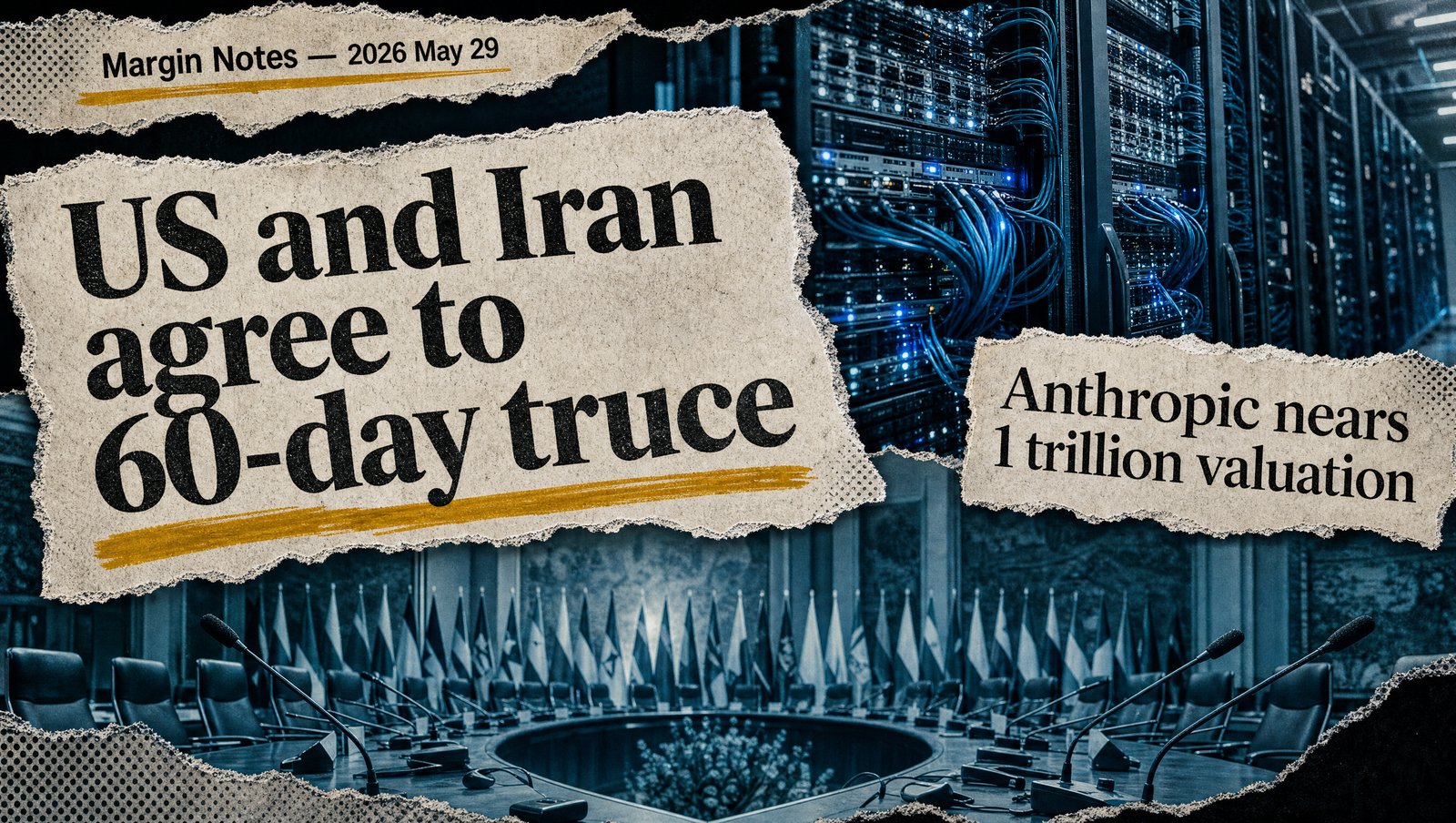
The Mechanics of De-escalation
The pipes of the energy complex cleared today as the market priced out the immediate threat of a blockade. When the US and Iran agreed to a 60-day truce renewal, the risk premium that had been inflating Brent and WTI vanished almost instantly. Brent fell 1.32% and Crude dropped 1.52%, while traders began betting on a potential 19% collapse for oil over the course of May. This is the normal amount of friction that occurs when a kinetic threat is replaced by a diplomatic window; the market simply stops paying for the "worst-case" scenario.
The result is a broad risk-on environment that carried the S&P 500 to 7,563.63 and the Nasdaq to 26,917.47. However, the underlying plumbing remains leaky. While the truce provides a temporary ceiling for energy prices, the US inflation rate has escalated to a three-year high, suggesting that the structural cost of living remains elevated. One wonders if the market is simply ignoring the inflation gauge because the immediate fear of a global oil shock has subsided.
The Compute Arms Race
The scale of the AI infrastructure trade has reached a level that is genuinely impressive. While most companies fight for incremental growth, Anthropic’s valuation neared $1 trillion, effectively leapfrogging OpenAI in the eyes of the private markets. This valuation is not just a number; it is a signal that the market is willing to pay a massive premium for scalable, safe AI models. The momentum is broadening beyond the model builders to the hardware providers, as Dell’s stock soared nearly 40% on a massive earnings beat and a robust AI-driven outlook.
This concentration of capital is creating a new class of "AI utilities." Lenovo’s shares doubled in May, their best month since 1999, as the world realizes that the bottleneck is no longer just the chip, but the system integration. The sheer volume of capital is staggering, evidenced by Apollo shopping a $36 billion debt deal to finance Google chips for Anthropic. It is striking that while the broader economy slows—with US first-quarter GDP chopped to 1.6%—the AI sector is operating in a completely different economic reality.
The Liquidity Lag
The crypto market is currently exhibiting a curious amount of inertia. Despite the record-breaking rally in equities and the easing of war fears, Bitcoin and ether remained little-changed. This suggests a decoupling from the typical risk-on trade; the asset is no longer reacting to geopolitical "peace premiums" but is instead waiting for a fresh catalyst. On-chain data from CryptoQuant suggests a buyer drought is hiding behind record holder supply, implying that the current price stability is a result of apathy rather than conviction.
Meanwhile, the regulatory plumbing is seeing some unusual activity. In a rare move, the CFTC and Gemini filed a joint motion to reverse a $5 million settlement, signaling a potential shift in how federal regulators handle past consent orders. While the "big" tokens stall, the infrastructure continues to integrate, with Cash App now supporting stablecoins for its millions of users. The market is essentially betting that the utility of the rails is more important than the price of the tokens.
The Numbers
- S&P 500: 7,563.63 — +0.58% as truce hopes boost risk appetite.
- Nasdaq: 26,917.47 — +0.91% driven by AI infrastructure gains.
- Brent Crude: $91.48 — -1.32% on reports of truce renewal.
- Gold: $4,553.7 — +0.43% as inflation fears persist.
- US 10-Year Treasury Yield: 4.453% — reflecting a steady rate path.
- Anthropic: $1 trillion — valuation leapfrogging OpenAI.
Elsewhere
- A Blue Origin rocket exploded on a Florida launchpad.
- French inflation accelerated to the highest level in over two years.
- Analysts are doubting the integrity of Indonesia's GDP data.
- The Bank of Japan is expected to raise interest rates in June.
- The Sui blockchain suffered another network outage.
- FalconX confidentially filed for an IPO with the US SEC.