The Mechanics of Escalation
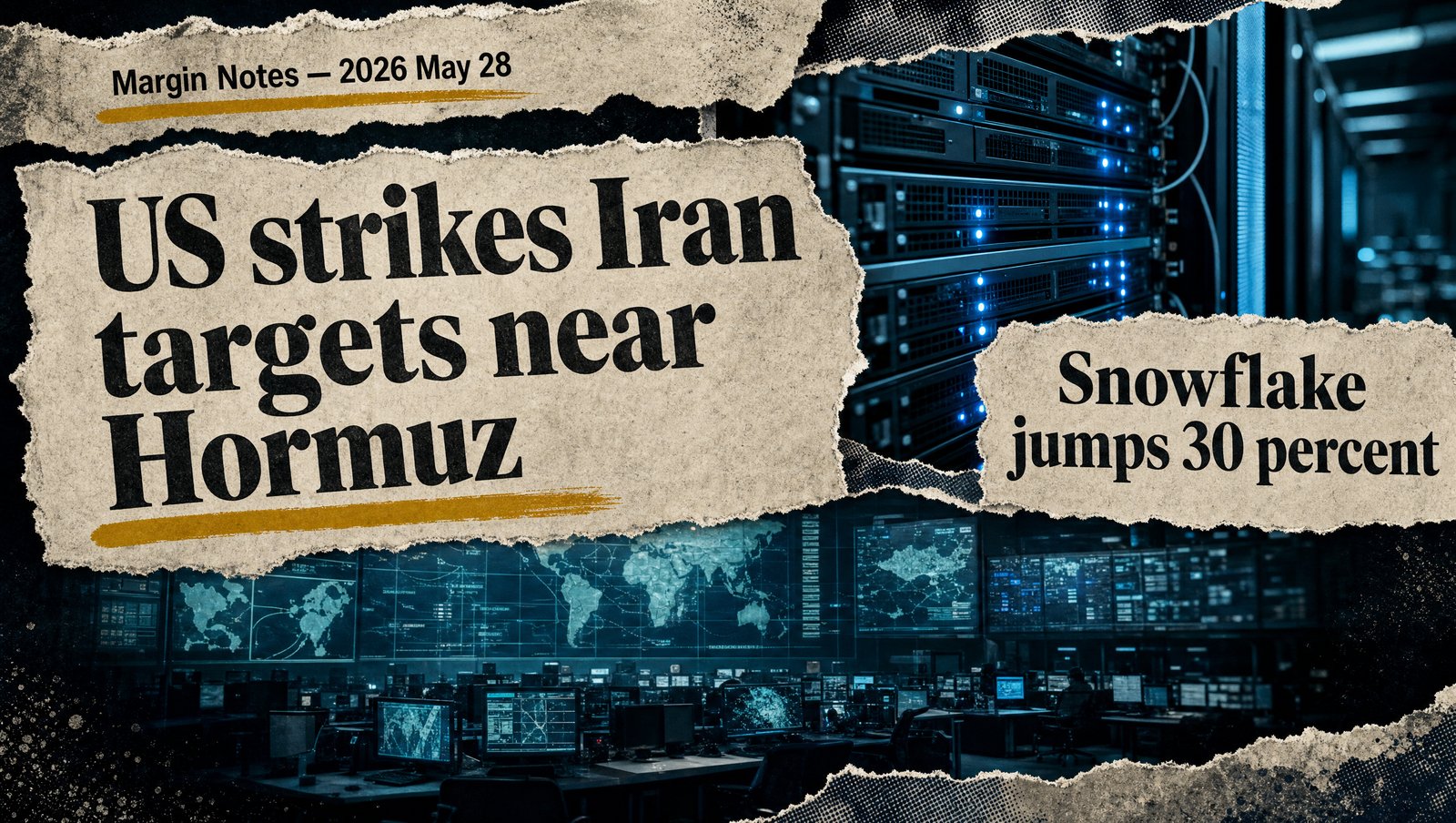
A few tactical airstrikes near the Strait of Hormuz started as a localized military operation on Thursday. Within hours, they had effectively dismantled the peace narrative the market spent the last week pricing. When the US military launched strikes near Hormuz with no accord in sight, the energy complex reacted with a violent surge. Brent Oil is now up 32.7% since the conflict began, and US gasoline has hit $4.5. This is the normal amount of friction that occurs when diplomatic optimism is replaced by kinetic reality; the market is no longer betting on a deal, but on the duration of the disruption.
The immediate consequence is a new set of constraints for the US Federal Reserve. While the equity market tries to ignore the noise, Fed Governor Jefferson warned of inflation risks driven by the energy spike. If the US government continues to use military strikes as a negotiation tool, the inflation gauge will remain stubbornly high. This puts the US Fed in a position where it cannot cut rates, regardless of the economic slowdown. One wonders if the market has simply accepted that the cost of capital will remain elevated as long as the Gulf remains a combat zone.
Cloud Resilience
While the energy complex is spiraling, the AI infrastructure trade is operating in a different reality. The market has decided that as long as the revenue growth is tangible, geopolitical risk is merely a background noise. This was evidenced when Snowflake shares jumped 30% following a massive sales outlook and a $6 billion deal with Amazon. It is a genuinely impressive display of momentum that suggests the "AI acceleration" theme is now decoupled from the broader macro environment.
This concentration of capital is creating a two-tier market. On one side, we have the legacy energy and industrial sectors fighting a war of attrition against inflation. On the other, we have the cloud giants who are effectively building their own internal economy. The fact that lapping record product-revenue growth can trigger a 30% rally in a single session proves that investors are prioritizing immediate AI utility over long-term geopolitical stability. The result is a market that is mostly healthy, provided you only own the companies that can compute their way out of a crisis.
Liquidity Flight
The crypto market is currently acting as a high-beta sensor for global instability. When the strikes hit, the reaction was immediate and brutal: Bitcoin dropped below $73,000 as $1 billion in leveraged positions were liquidated. The institutional exit was even more pronounced, with the BlackRock Bitcoin ETF shedding $528 million in a single day. This is a textbook example of a liquidity squeeze; when the world catches fire, investors sell the most liquid risk assets to raise cash.
Yet, beneath the price action, the structural plumbing is continuing to integrate with the mainstream. The fact that Cash App now supports stablecoins for nearly 60 million users is a significant milestone. It moves the asset class away from speculative trading and toward a functional utility for payments. Similarly, the DTCC's plan to bring tokenized assets to the Stellar network suggests that Wall Street is still building the rails, even as the tokens themselves are being hammered. The market is essentially betting that the infrastructure is the only thing that matters in the long run.
The Numbers
- Brent Oil: $96.7 — +2.6% daily as Hormuz risks escalate.
- S&P 500: 7,520.36 — +0.02% as tech gains offset energy drags.
- Bitcoin: <$73,000 — six-week low following $1 billion in liquidations.
- Gold: $4,412.8 — -1.53% as investors sell safe-havens to raise cash.
- US 10-Year Treasury Yield: 4.51% — reflecting persistent inflation fears.
- Snowflake: $230 — +30% on record AI-driven sales outlook.
Elsewhere
- South Africa is poised for its first interest rate hike since 2023 to counter energy-driven inflation.
- ByteDance is developing custom CPU chips to support its global AI rollout.
- The US CFTC is seeking to erase a previous $5 million settlement with Gemini.
- Taiwan's stock exchange is planning longer trading hours and odd-lot reforms to boost liquidity.
- JD.com's founder vowed to protect Chinese jobs from the encroachment of AI and robotics.
- Nomura analysts suggest the Bank of Japan may delay rate hikes due to the Iran conflict.