The Mechanics of Escalation
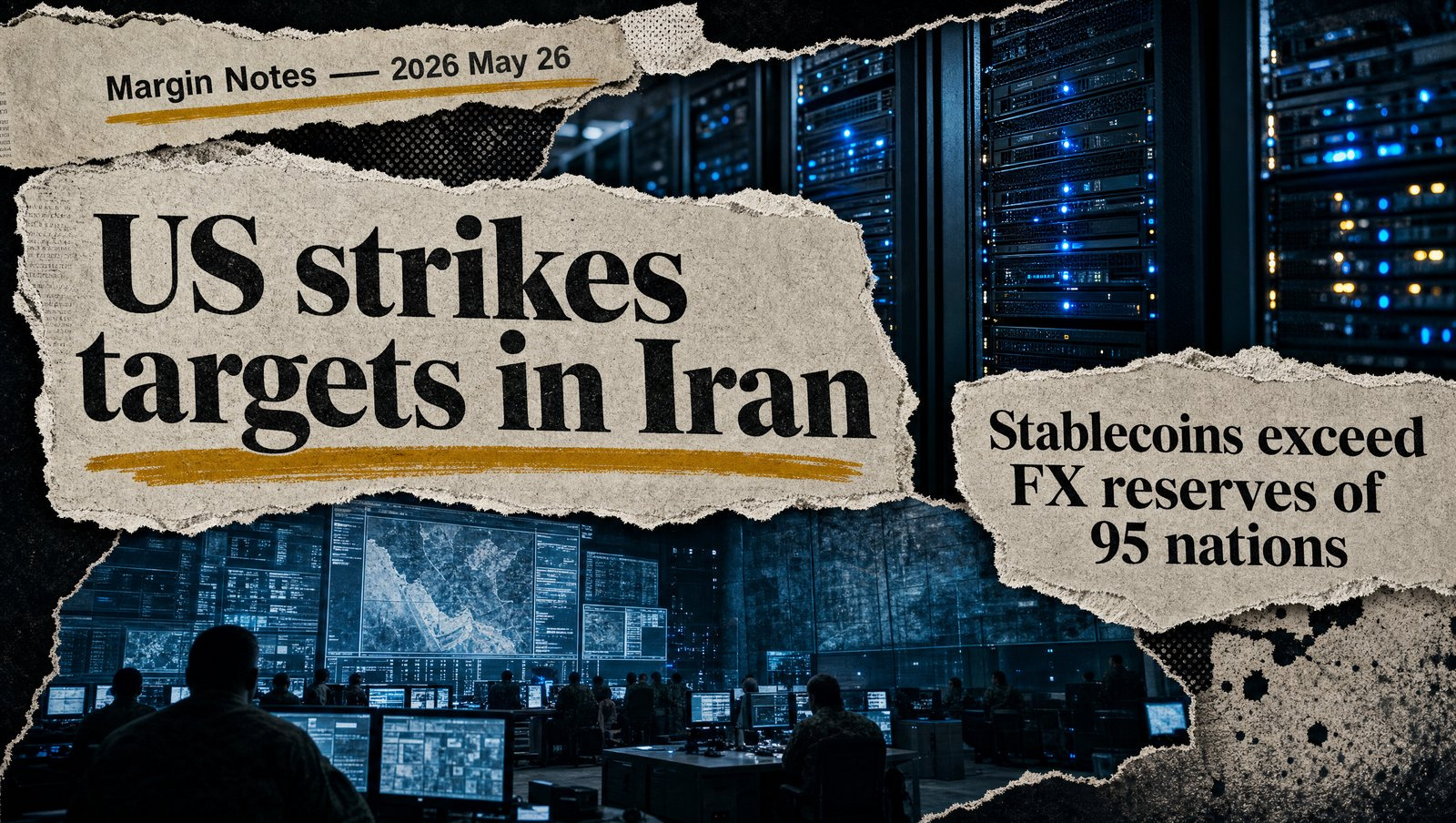
US military strikes on Iran started as a tactical adjustment on Monday night. By Tuesday, they were whipsawing the energy complex. While the US government claims that talks are proceeding nicely, the physical reality of US military strikes hitting targets in Iran has reintroduced a risk premium that the market spent the last 48 hours trying to erase. This is the normal amount of friction that occurs when diplomatic optimism meets kinetic action; the market is now forced to price the possibility that the ceasefire is a facade.
The result is a volatile energy complex where Brent Oil is fighting for direction. One wonders if the market has simply accepted that the US government uses targeted strikes as a form of punctuation in its negotiations. The immediate effect is a return to safe-haven demand, as investors move back into gold and wait for the US Federal Reserve to signal how this new volatility will impact the inflation gauge.
The Rate Trap
The US Federal Reserve is currently caught in a mechanical trap. According to analysts, the institution cannot cut rates due to persistent inflation concerns, yet it lacks a clear justification for further hikes. This stalemate is reflected in the US Treasury yield curve, which is flashing a higher-for-longer warning. When the risk-free rate remains elevated without a clear path down, growth assets are essentially fighting a headwind that never stops blowing.
This institutional paralysis is triggering defensive maneuvers in the private sector. European banks are offloading risk on $500 billion of corporate loans, a move that suggests a growing caution regarding credit quality in a high-rate environment. Simultaneously, the European Central Bank is considering a rate hike in June. The collective result is a tightening of global liquidity that is largely invisible in the headline indices but deeply felt in the credit markets.
Sovereign Liquidity
Bitcoin is behaving like a tired athlete, with volatility hitting a nine-month low as the asset takes a breather. The price action has stalled near $76,500, suggesting that the market is in a macro wait-and-see mode. However, the structural plumbing of the asset class is reaching a scale that is genuinely remarkable. The stablecoin market value now exceeds the FX reserves of 95 nations, transforming these digital assets from simple trading tools into a primary layer of global liquidity.
The migration toward sovereign-level integration is accelerating. Georgia has tapped Tether as an official stablecoin with the blessing of its central bank, a move that validates the private stablecoin model at a national level. While Bitcoin consolidates, capital is rotating into higher-beta alternatives, with HYPE funds attracting millions as investors dump Bitcoin and Ether ETFs. The market is no longer just betting on a digital gold narrative; it is building a parallel financial system that operates independently of the traditional banking rails.
The Numbers
- S&P 500: 7,473.47 — +0.37% as earnings strength offsets geopolitical noise.
- Crude Oil: $92.11 — -4.65% despite renewed strikes in Iran.
- US 10-Year Treasury Yield: 4.51% — reflecting a higher-for-longer regime.
- Gold: $4,566.1 — +0.21% as a hedge against Middle East volatility.
- Euro/USD: 1.16 — -0.11% amid ECB hike speculation.
- Bitcoin: ~$76,500 — volatility hits a nine-month low.
A Few Last Things
- Macquarie predicts the Yuan may hit five per dollar as carry-trades exit.
- Huawei claimed a chipmaking breakthrough to shorten the gap with TSMC.
- The Reserve Bank of India is assessing the impact of the Iran war on Indian companies.
- China EV exports rose 40% year-over-year in April.
- A Singapore envoy highlighted the clean energy trade as a target for smart money.
- Sri Lanka implemented an outsized 100-bp rate hike to counter the Gulf crisis.