The Day in Numbers
- Brent Crude: $98.32 — rose 0.90% as the Hormuz impasse revived the energy risk premium.
- US 10-Year Treasury Yield: 5.20% — held near cycle highs as inflation and fiscal concerns kept duration expensive.
- Gold: $4,204.10 — fell 2.71%, showing that a firm dollar and high real rates outweighed its usual geopolitical appeal.
- S&P 500: 7,743.41 — gained 0.51%, though the advance remained narrow beneath the headline index.
- Nasdaq: 27,068.72 — climbed 0.48% while investors rotated within technology rather than abandoning it.
- Bitcoin: $83,254 — dropped roughly 1.49% as geopolitical risk pulled liquidity from high-beta assets.
- Solana ETF inflows: $188 million — arrived over one week, a sign that institutional appetite is becoming more selective rather than simply smaller.
Oil Turns the Strait Into a Rate Decision
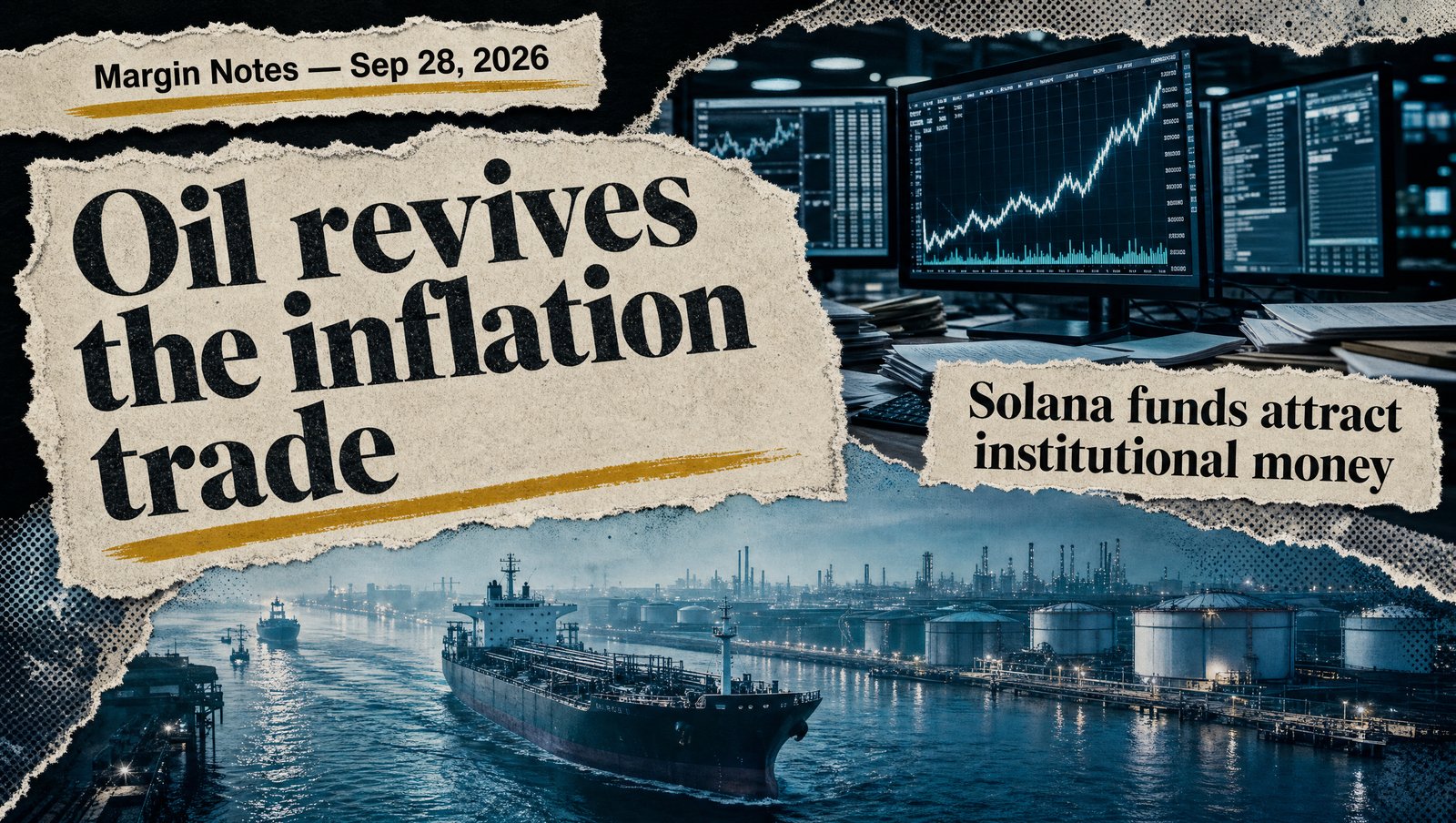
Brent crude reached $98.32 as the US government rejected an Iranian proposal tied to reopening the Strait of Hormuz, putting the inflation channel back in charge of the tape. The bond selloff resumed as oil rose, which is a concise way of saying that traders now have to price supply risk and monetary restraint at the same time. The US 10-year yield held around 5.20%, while gold fell more than 2.7%; safe havens, it turns out, still prefer a weaker dollar and lower real rates.
That combination makes the shock more persistent than a one-day energy spike. Oil raises the cost of goods, higher inflation expectations keep the US Fed cautious, and a firm dollar makes non-yielding assets less inviting. Treasury Secretary Scott Bessent is urging the US Fed to keep an open mind on inflation, but the market is already displaying its own version of an open mind: it is willing to believe in eventual disinflation, just not cheaply.
Washington and Beijing Trade Specifics for Relief
The United States and China published product lists covering $30 billion of goods, turning their extended trade truce from a diplomatic gesture into something importers and investors can actually calculate. Washington and Beijing put tariff relief on a product-by-product footing, and that matters because broad promises tend to evaporate in the space between a podium and a customs office. The truce now runs until January, with two further Trump-Xi meetings planned later this year.
The relief is real, but it is not a clearance sale on geopolitical risk. China will cut levies on some US farm goods while excluding soybeans, leaving one of the most politically sensitive commodities outside the bargain. That partiality explains why equities could rise, with the S&P 500 up 0.51%, without producing a full risk-on response. Concrete terms can lower uncertainty; they cannot make unresolved terms disappear.
Solana Finds the Institutional Bid Bitcoin Misses
Solana ETFs took in $188 million over the past week, including a daily record of $87 million on Friday, even as Bitcoin fell to about $83,254. Solana funds attracted a record weekly inflow, suggesting that institutional demand for crypto has not vanished; it has become choosier about where it wants to sit. Bitwise captured roughly two-thirds of those inflows, an unusually concentrated vote for a particular route into the asset.
Bitcoin, meanwhile, declined alongside Nasdaq futures as the US government left open the possibility of further strikes against Iran. That split is useful. Solana is receiving a product-specific allocation, while Bitcoin remains exposed to the broad liquidity impulse, which is currently being squeezed by oil, the dollar, and 5.20% Treasury yields. The market is not rejecting crypto in one clean motion. It is separating access, narrative, and macro sensitivity, because apparently one category was not complicated enough.
Elsewhere
- Japan’s two-year government yield approached 2% as traders increased the odds of a Bank of Japan rate hike in October.
- European equities faced fresh valuation doubts as higher regional bond yields challenged the durability of their rally.
- China’s industrial profit growth slowed for a fourth month, adding a softer demand signal to the day’s trade optimism.
- Oracle disclosed a $664 billion backlog, reopening the question of whether AI infrastructure spending can outrun its cash requirements.
- Payward positioned Kraken as broader financial infrastructure, extending the exchange’s ambition into trading, payments, and asset management.
- California enacted a ban on memecoins, deepening the patchwork nature of US digital-asset regulation.